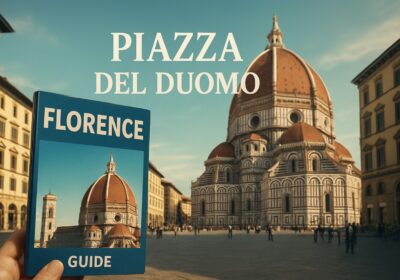

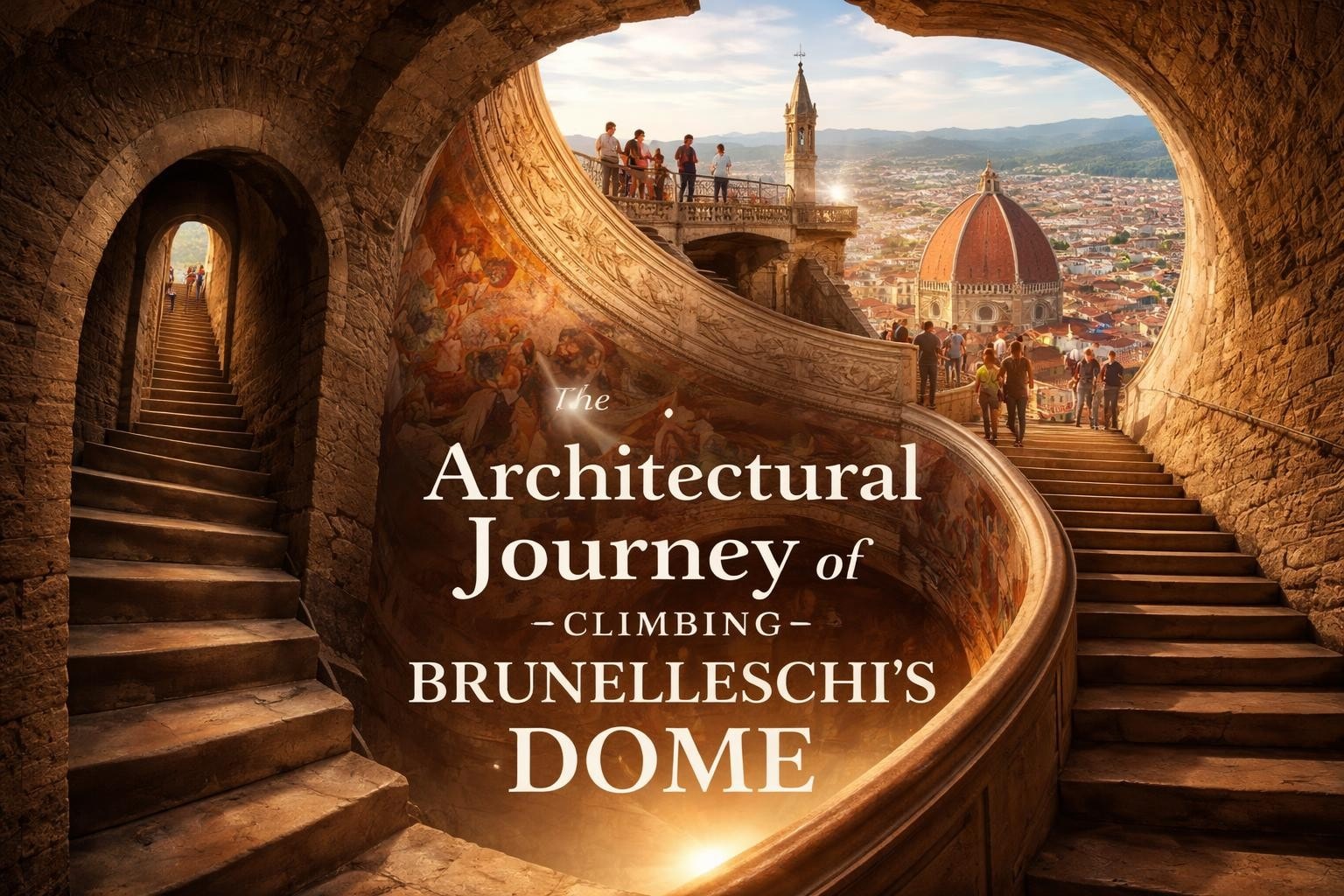
The duomo climb in Florence stands as one of Europe's most remarkable architectural experiences, offering visitors a chance to ascend Brunelleschi's Renaissance masterpiece while witnessing centuries of artistic and engineering achievement. This iconic ascent takes travelers through narrow passages, past breathtaking frescoes, and up 463 steps to reach spectacular panoramic views of the Tuscan capital. Whether you're a first-time visitor or a seasoned traveler, understanding what to expect from this challenging yet rewarding climb will help you prepare for an unforgettable journey to the top of the Florence Cathedral's magnificent dome.
Planning Your Duomo Climb Experience
Proper preparation makes all the difference when tackling the duomo climb. The experience requires advance planning, particularly during Florence's peak tourist seasons from April through October when demand for access reaches its highest levels.
Booking Requirements and Entry Times
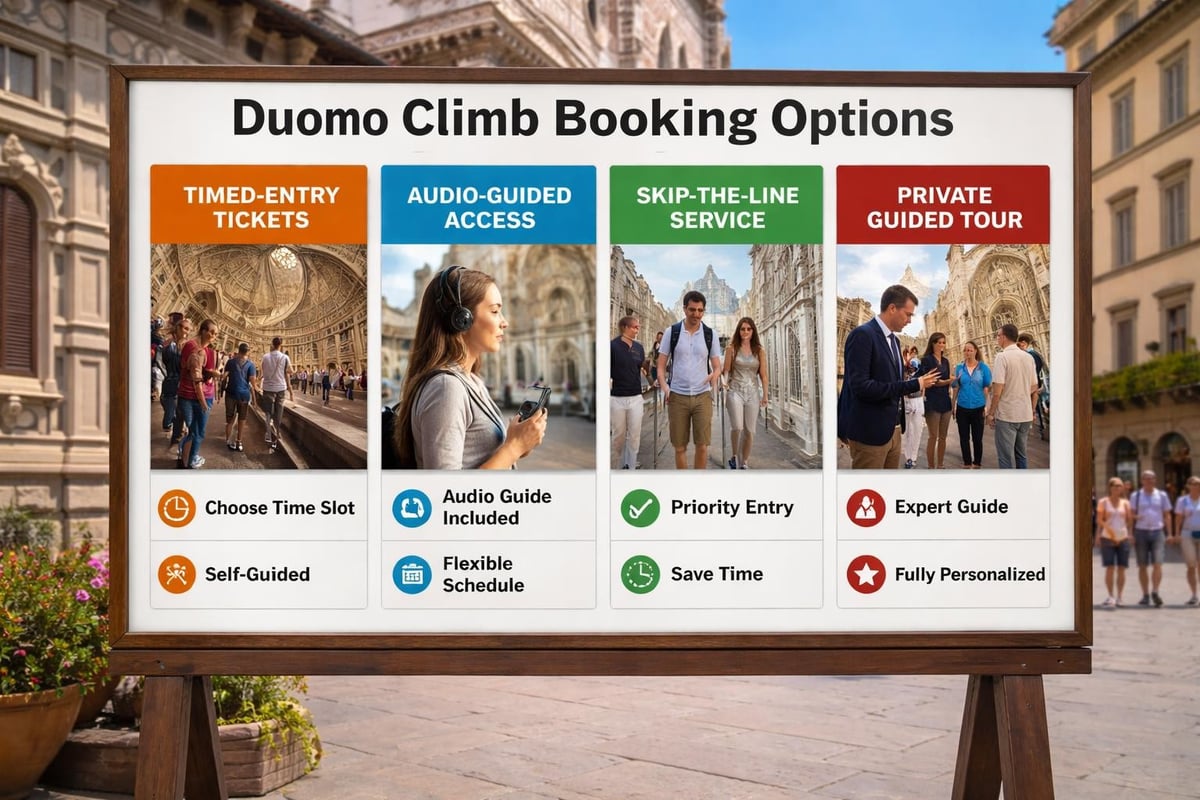
Reserved entry times have become mandatory for the duomo climb, eliminating the possibility of spontaneous visits. This system ensures crowd control within the narrow passageways and maintains safety standards throughout the ascent. Tickets typically sell out weeks in advance during high season, making early booking essential for securing your preferred time slot.
Key booking considerations include:
- Advance reservations required for all visitors
- Specific entry time slots with no flexibility for late arrivals
- Limited daily capacity to preserve the structure and visitor experience
- Combined tickets that include access to other cathedral complex monuments
- Separate bookings needed for climbing Giotto's Bell Tower
The Opera di Santa Maria del Fiore manages all official ticketing and provides the most current information about availability and pricing. Many visitors find that timed-entry tickets with audio guides offer excellent value, providing historical context while maintaining schedule flexibility within the cathedral complex.
Physical Demands and Accessibility
The duomo climb presents significant physical challenges that every visitor should consider before booking. The 463-step ascent includes sections with steep, narrow staircases, tight passages, and no elevator option. This climb differs substantially from typical tourist attractions in its physical demands.
| Aspect | Details |
|---|---|
| Total Steps | 463 steps to the top |
| Stairway Width | Narrow passages, some single-file only |
| Claustrophobia Factor | Confined spaces in multiple sections |
| Rest Areas | Limited opportunities to pause during ascent |
| Accessibility | Not wheelchair accessible, no elevator |
| Estimated Duration | 45-60 minutes round trip |
Visitors with mobility limitations, heart conditions, claustrophobia, or knee problems should carefully evaluate whether the duomo climb suits their abilities. The cathedral complex offers alternative experiences, including ground-level tours of the cathedral interior and museum visits that showcase the dome's history without the physical demands.
Understanding the Architectural Journey
The duomo climb reveals Brunelleschi’s architectural genius through a carefully designed path that winds between the dome's inner and outer shells. This unique double-shell construction, completed in 1436, revolutionized Renaissance architecture and remains an engineering marvel nearly six centuries later.
The Ascent Path and Interior Features
Your journey begins at ground level, where you'll enter through a designated door and immediately start climbing. The initial staircases feel relatively spacious, but as you ascend, the passages narrow considerably. Between the two shells of the dome, you'll navigate corridors that showcase the construction techniques Brunelleschi employed to create this self-supporting structure without traditional scaffolding.
Approximately halfway through the duomo climb, you'll reach the interior gallery where Giorgio Vasari's massive fresco "The Last Judgment" surrounds you in stunning detail. This viewing platform provides a unique perspective on the artwork, allowing you to examine brushwork and details invisible from the cathedral floor 45 meters below. The scale becomes overwhelming as you realize the fresco covers 3,600 square meters of surface area.
The final sections of the climb become progressively steeper and more confined. Original Renaissance-era wooden beams and brick herringbone patterns demonstrate Brunelleschi's innovative construction methods. These authentic architectural elements remain remarkably preserved, offering tangible connections to the craftsmen who built this structure six hundred years ago.
Views from the Top
Reaching the lantern's base rewards climbers with 360-degree panoramic views across Florence and the surrounding Tuscan countryside. The terrace sits 114 meters above street level, providing perspectives unavailable anywhere else in the city. Red-tiled rooftops stretch in every direction, punctuated by towers, domes, and historic landmarks.
Notable sights visible from the summit:
- Giotto's Campanile standing immediately adjacent
- Palazzo Vecchio's distinctive tower to the south
- The Arno River winding through the city center
- San Miniato al Monte on the hillside across the river
- The distant Apennine Mountains framing the horizon
Photography opportunities abound, though the protective barriers and mesh screens can challenge composition. Morning light typically provides the best conditions for photography, with fewer atmospheric haze issues than afternoon hours. The duomo climb's summit space allows roughly 20-30 people at a time, creating occasional crowding during peak periods.
Comparing the Duomo Climb to Giotto's Bell Tower
Florence's cathedral complex offers two distinct climbing experiences, each with unique characteristics and perspectives. While the duomo climb receives more attention, Giotto’s Campanile presents a compelling alternative worth considering for visitors planning their cathedral complex experience.
Structural and Experience Differences
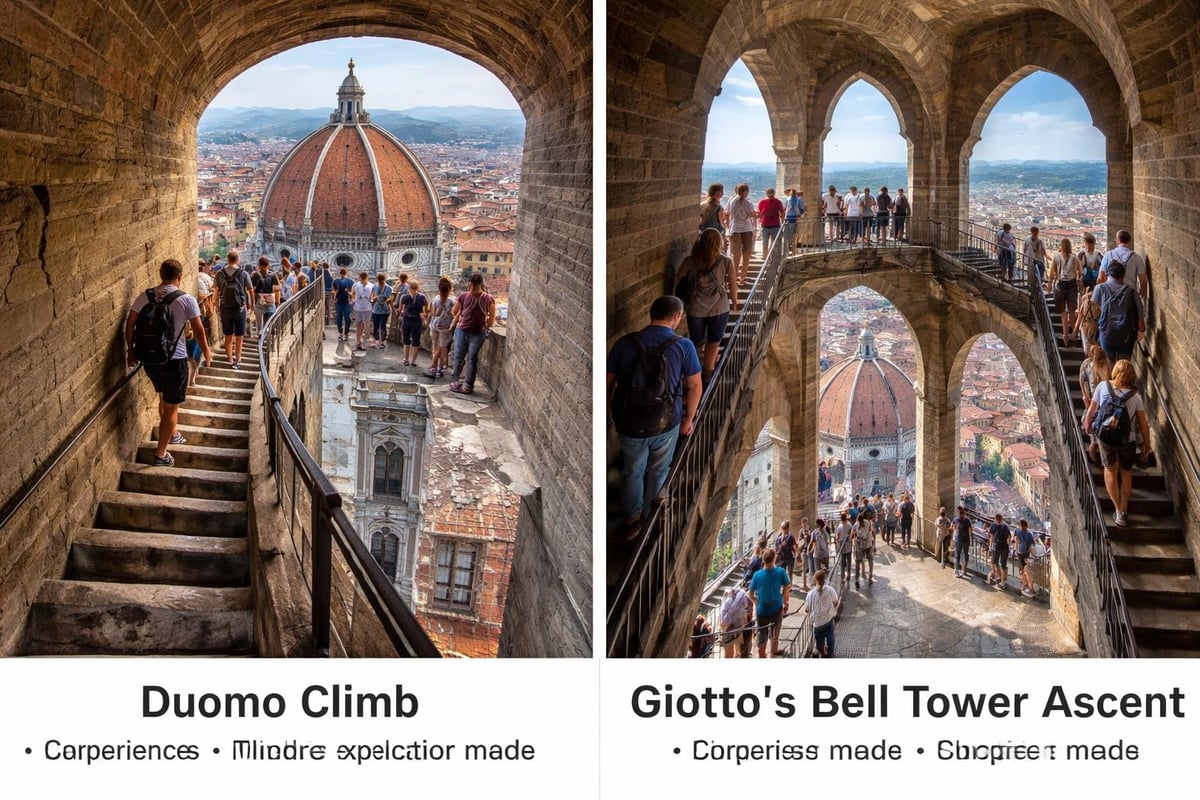
The bell tower climb involves 414 steps, slightly fewer than the dome's 463, but the experience differs significantly in character and presentation. Giotto's design incorporated multiple terrace levels, providing rest opportunities and varied perspectives during the ascent. These intermediate platforms break the climb into manageable sections while offering progressively expanding views.
| Feature | Brunelleschi's Dome | Giotto's Campanile |
|---|---|---|
| Total Steps | 463 | 414 |
| Rest Platforms | Minimal | Multiple levels |
| Interior Artwork | Vasari's Last Judgment fresco | Marble reliefs and sculptures |
| Stairway Width | Very narrow, confined | Wider, less claustrophobic |
| View of Dome | No (you're on it) | Yes, excellent perspective |
| Crowd Density | Often congested | Generally lighter traffic |
The bell tower's architectural features include intricate marble panels, Gothic-style windows, and original bells still visible in the upper chamber. The structure's straight vertical design means staircases follow more conventional patterns compared to the dome's curved passages. Visitors concerned about confined spaces often find the campanile climb more comfortable, though both experiences demand reasonable fitness levels.
Strategic Visiting Approaches
Many experienced visitors recommend climbing both structures if time and stamina permit, as each offers distinct perspectives. The dome provides intimate access to Brunelleschi's architectural masterpiece and views across Florence from within the icon itself. The bell tower offers the perfect vantage point for photographing the dome, which becomes impossible when you're standing atop it.
For those selecting just one duomo climb option, consider your priorities. Photography enthusiasts seeking that perfect dome shot should choose the bell tower. Architecture and engineering enthusiasts wanting to experience Brunelleschi's construction methods firsthand should select the dome. The Giotto’s Bell Tower and Cathedral combined experience provides excellent value for visitors wanting comprehensive cathedral complex access.
Maximizing Your Visit Strategy
Successful duomo climb experiences depend heavily on timing, preparation, and understanding crowd patterns. Strategic planning transforms this popular attraction from a rushed obligation into a memorable highlight of your Florence visit.
Optimal Timing and Seasonal Considerations
Early morning time slots consistently provide the best overall experience for the duomo climb. The first entry times, typically starting around 8:30 AM, offer several distinct advantages over midday or afternoon ascents. Crowds remain lighter, temperatures stay cooler (particularly important during summer months), and morning light enhances photography from the summit.
Seasonal variations significantly impact the duomo climb experience:
- March through May: Moderate crowds, pleasant temperatures, extended daylight hours
- June through August: Peak crowds, intense heat in the stairways, longest wait times
- September through October: Heavy crowds continuing from summer, improving weather conditions
- November through February: Lightest crowds, shorter days, occasional closures for weather
Winter months present unique advantages despite shorter visiting hours and unpredictable weather. The reduced tourist volume means more personal space during the ascent and less crowding at the summit viewing platform. However, the exposed terrace at the top can become uncomfortably cold and windy during January and February.
What to Bring and Wear
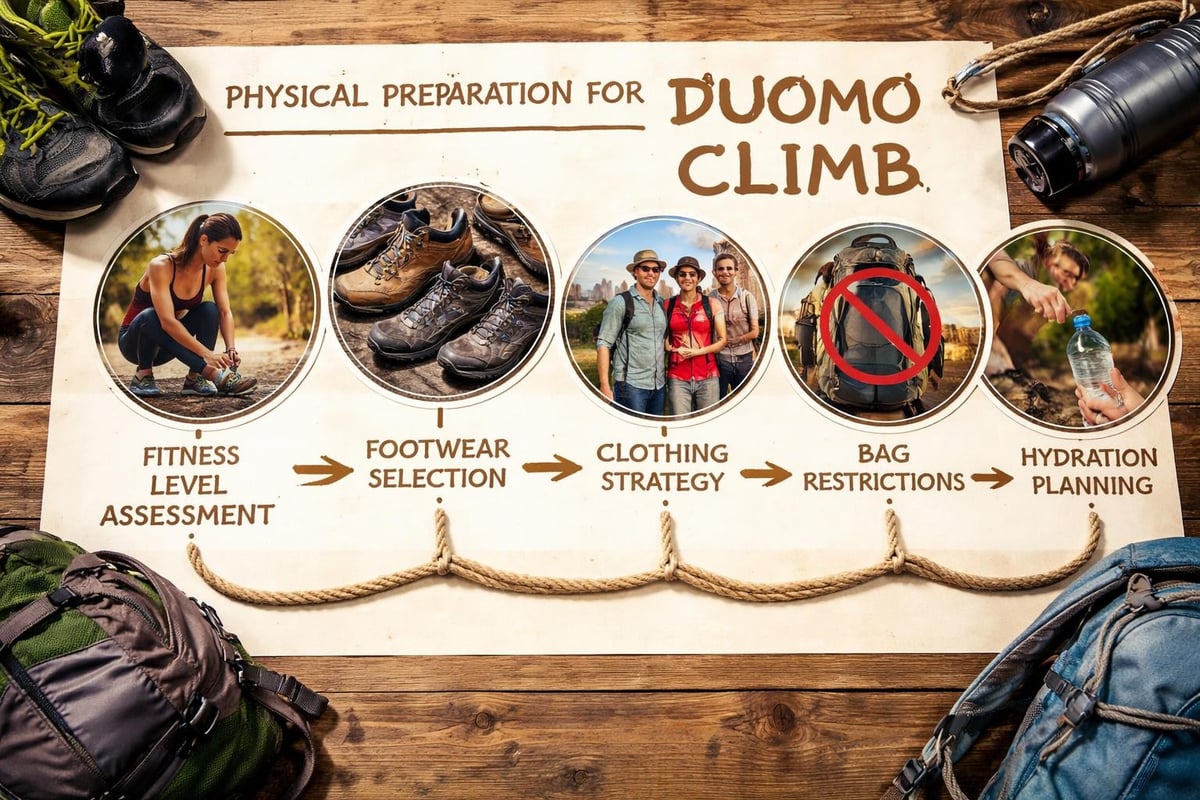
The duomo climb's physical demands and environmental conditions require specific preparation. Comfortable, athletic-style shoes with good traction prove essential, as some steps show centuries of wear and can be slippery. The stairways maintain relatively consistent temperatures year-round, staying cool even during summer, so light layers work better than single heavy garments.
Essential items for your climb:
- Water bottle (small size to carry easily)
- Comfortable athletic or walking shoes with grip
- Light jacket or sweater for cool stairways
- Camera or smartphone for photography
- Minimal bag or backpack to navigate narrow passages
- Sunscreen and sunglasses for the summit terrace
Large bags, backpacks, and prohibited items cannot be brought on the duomo climb. No storage facilities exist at the entry point, so plan accordingly by leaving unnecessary items at your accommodation or in a secure location. The cathedral complex strictly enforces these policies for safety and preservation reasons.
Enhancing the Experience with Expert Guidance
While independent visits to the duomo climb provide flexibility and self-paced exploration, guided experiences unlock deeper understanding of the architecture, history, and artistic significance. Professional guides transform the physical ascent into an educational journey through Renaissance innovation and cultural achievement.
Benefits of Audio Guides and Private Tours
The Duomo Cathedral audio guide option provides detailed commentary synchronized to specific points during the climb. These multilingual guides explain construction techniques, historical context, and artistic details without requiring you to read plaques or signage in dim stairways. The self-paced format allows you to pause for detailed explanations or move quickly through familiar material.
Private guided tours offer the most comprehensive duomo climb experience, particularly for visitors with specific interests in architecture, art history, or Renaissance culture. Expert guides provide access to information unavailable in standard audio presentations, answer questions specific to your interests, and often share lesser-known stories about the dome's construction and the personalities behind its creation.
The climbing experience detailed by European Traveler emphasizes how knowledgeable guides enhance understanding of Brunelleschi's revolutionary techniques. The dome's construction without traditional wooden supports, using innovative herringbone brick patterns and progressive rings that supported themselves during construction, becomes far more impressive when expert commentary explains the engineering principles involved.
Group Size Considerations
Small group tours, typically limited to 10-15 participants, balance social experience with manageable crowd sizes during the duomo climb. These groups move through the narrow passages more efficiently than larger tour groups while still providing the camaraderie and shared discovery that many visitors enjoy. The guide can ensure everyone hears commentary even in echo-prone sections of the climb where acoustics challenge communication.
Private tours accommodate personal schedules, specific interests, and flexible pacing. Families with children, photographers wanting extra time at viewing points, or visitors with particular historical interests benefit most from this customized approach. The investment in private guidance pays dividends through personalized attention and the ability to adapt the experience to your group's needs and preferences.
Historical Context and Cultural Significance
Understanding the duomo climb's historical importance transforms the physical experience into a meaningful cultural encounter. The dome's completion in 1436 marked a defining moment in Renaissance architecture, demonstrating that innovative thinking could overcome seemingly impossible engineering challenges.
Brunelleschi's Revolutionary Design
Filippo Brunelleschi won the commission to complete the cathedral's dome through a competition that challenged architects to solve a problem that had stumped builders for decades. The cathedral's enormous octagonal base, measuring 45.5 meters in diameter, required a dome far larger than any built since antiquity. Traditional construction methods using wooden scaffolding from the ground would have been economically and practically impossible.
Brunelleschi's solution employed a double-shell design with an inner and outer dome separated by a space wide enough to incorporate the stairways used during construction and now traversed by visitors. This innovative approach distributed weight more efficiently while creating the distinctive profile visible across Florence's skyline. The herringbone brick pattern, visible during the duomo climb, allowed each ring to support itself during construction without requiring temporary supports.
The comprehensive guide from KimKim explores how Brunelleschi studied Roman architecture, particularly the Pantheon, to develop his construction techniques. However, he departed from Roman methods by eschewing concrete in favor of brick and stone, materials more readily available in 15th-century Tuscany. His innovations influenced cathedral construction across Europe for centuries afterward.
The Dome's Place in Renaissance Florence
The cathedral dome's completion coincided with Florence's emergence as Europe's cultural and financial center. The Medici family's patronage of arts and architecture transformed the city into a showcase of Renaissance achievement. The duomo climb allows modern visitors to experience this heritage firsthand, walking the same passages that medieval workers used while constructing the structure.
The dome's consecration by Pope Eugene IV in 1436 represented both religious significance and civic pride for Florence. The city had invested enormous resources over 140 years to complete the cathedral complex, and Brunelleschi's dome crowned this achievement with an engineering marvel that demonstrated Florentine ingenuity and ambition. The structure became a symbol of the city itself, visible from kilometers away across the Tuscan landscape.
Practical Tips for Different Visitor Types
Different travelers bring varying needs, abilities, and interests to the duomo climb experience. Tailoring your approach to your specific situation ensures the most satisfying visit possible.
Families with Children
Children must be physically capable of completing the duomo climb independently, as no carrier devices or strollers can be accommodated in the narrow passages. Most families find that children aged 8-10 and older handle the climb successfully, though individual fitness and comfort levels vary. The confined spaces and steep sections can intimidate younger children or those uncomfortable with heights.
Parents should honestly assess their children's capabilities before booking. The inability to turn back midway through the climb (the path is one-way in most sections) means committed ascent once you begin. Setting clear expectations about the physical demands and celebrating the achievement afterward helps children appreciate the experience.
Family-friendly strategies include:
- Booking the first entry time when children are freshest
- Treating the climb as an adventure rather than an obligation
- Promising a gelato reward at completion
- Bringing water and small snacks (consumed before entering)
- Photographing children at various stages for memory-keeping
Senior Visitors and Accessibility Concerns
The duomo climb presents legitimate accessibility challenges that senior visitors should carefully consider. While chronological age alone doesn't determine capability, honest assessment of mobility, endurance, and comfort with stairs proves essential. No assistance is available during the climb, and the narrow passages make it difficult for companions to provide physical support.
Alternative experiences within the cathedral complex offer culturally rich visits without physical demands. The cathedral floor level provides access to remarkable artwork, historic significance, and architectural beauty. The Opera del Duomo Museum presents close-up views of original sculptures, including Lorenzo Ghiberti's bronze baptistry doors, along with detailed models explaining the dome's construction without requiring the actual climb.
Solo Travelers and Photography Enthusiasts
Solo travelers often find the duomo climb particularly rewarding, as the self-paced nature allows stopping for photography or contemplation without group pressure. Early morning time slots provide the best light and smallest crowds for photographers seeking that perfect shot. The summit's protective barriers and mesh screens require careful composition to minimize interference in photographs.
Photography enthusiasts should remember that the interior lighting varies dramatically, with some sections quite dark while others receive natural light through windows. Smartphone cameras handle these challenging conditions remarkably well in 2026, though understanding basic exposure compensation improves results. The summit terrace provides the most dramatic photography opportunities, rewarding those who time their visit for optimal light conditions.
Beyond the Climb: Cathedral Complex Integration
The duomo climb represents just one element within the larger cathedral complex, officially known as Piazza del Duomo. Understanding how the various monuments interconnect helps visitors plan comprehensive experiences that maximize their investment of time and admission fees.
The Complete Cathedral Experience
Standard tickets typically include access to multiple sites within the complex, valid for 72 hours from first use. This generous time frame allows spreading visits across multiple days, reducing the pressure to see everything in a single exhausting session. The combined approach provides better value than individual entries while offering schedule flexibility.
Sites included in most comprehensive tickets:
- Brunelleschi's Dome: The iconic duomo climb experience
- Giotto's Campanile: The bell tower ascent with dome views
- Baptistry of San Giovanni: Octagonal building with famous bronze doors
- Cathedral Floor: Interior nave, aisles, and artwork
- Opera Museum: Sculpture collection and architectural models
- Santa Reparata: Archaeological remains beneath the cathedral
Strategic visitors often begin with the timed-entry duomo climb, then explore other sites during the remaining validity period. This approach prevents the common mistake of exhausting yourself with multiple climbs in succession. The museum visit, positioned after physical exertions, provides air-conditioned comfort while delivering cultural content that enriches understanding of everything you've experienced.
Connecting with Broader Florence Exploration
The cathedral complex occupies Florence's historic center, placing visitors within walking distance of virtually every major attraction. The authentic experiences beyond typical tourist crowds often await just streets away from the duomo, rewarding those who venture beyond the immediately obvious destinations.
Strategic planning places the duomo climb early in your Florence visit, ideally on your first or second day. This timing provides orientation to the city's layout from the summit perspective, helping you visualize how different districts, landmarks, and the Arno River relate spatially. The knowledge gained improves navigation and planning for subsequent days exploring street-level attractions.
Managing Expectations and Common Misconceptions
Realistic expectations prevent disappointment and help visitors appreciate the duomo climb for what it genuinely offers rather than imagined experiences that don't match reality.
What the Climb Is and Isn't
The duomo climb is fundamentally an architectural and engineering experience rather than a museum visit or art gallery. While Vasari's fresco provides artistic highlight, the primary value lies in experiencing Brunelleschi's construction methods firsthand and reaching the summit viewpoint. Visitors seeking extensive artwork interpretation or detailed artistic analysis should prioritize the Opera Museum or cathedral floor visits.
The physical demands are authentic and unavoidable. No shortcuts, elevators, or easier alternatives exist for accessing the dome's summit. Marketing materials accurately represent the 463 steps and narrow passages, and dismissing these warnings leads to difficult situations for unprepared visitors. The experience rewards those who embrace the challenge with appropriate preparation and realistic fitness assessment.
Common misconceptions include:
- Myth: You can turn back halfway if tired
- Reality: The one-way path commits you to completing the climb
- Myth: Young children can be carried in backpack carriers
- Reality: Carriers cannot navigate the narrow passages safely
- Myth: The climb takes only 15-20 minutes
- Reality: Most visitors need 45-60 minutes round trip
- Myth: Same-day tickets are readily available
- Reality: Advance reservations are mandatory and often sell out weeks ahead
Weather and Seasonal Variations
The enclosed stairways protect climbers from rain and direct sun, but the summit terrace sits completely exposed to weather conditions. Summer heat creates challenging conditions in the confined passages, where air circulation remains limited and temperatures can feel oppressive. Winter wind on the terrace can make extended photography sessions uncomfortable despite beautiful clear-day visibility.
Detailed visitor information from Visit Florence emphasizes checking weather forecasts before your scheduled climb, particularly during winter months when storms can reduce visibility and comfort at the summit. However, changing your reservation often proves difficult or impossible, making flexible backup plans important for weather-dependent visitors.
The duomo climb stands as Florence's signature architectural experience, combining physical challenge with historical significance and spectacular views that justify the effort required. By planning ahead, preparing physically, and understanding what to expect, visitors transform this demanding ascent into one of their most memorable Italian experiences. Whether you choose a self-guided visit with audio commentary or prefer expert-led private tours, EU Tours provides skip-the-line access and timed-entry options that ensure smooth, hassle-free experiences at the Florence Cathedral and throughout the city's most iconic landmarks.