

Cathedral di Santa Maria: Architecture & Visitor Guide
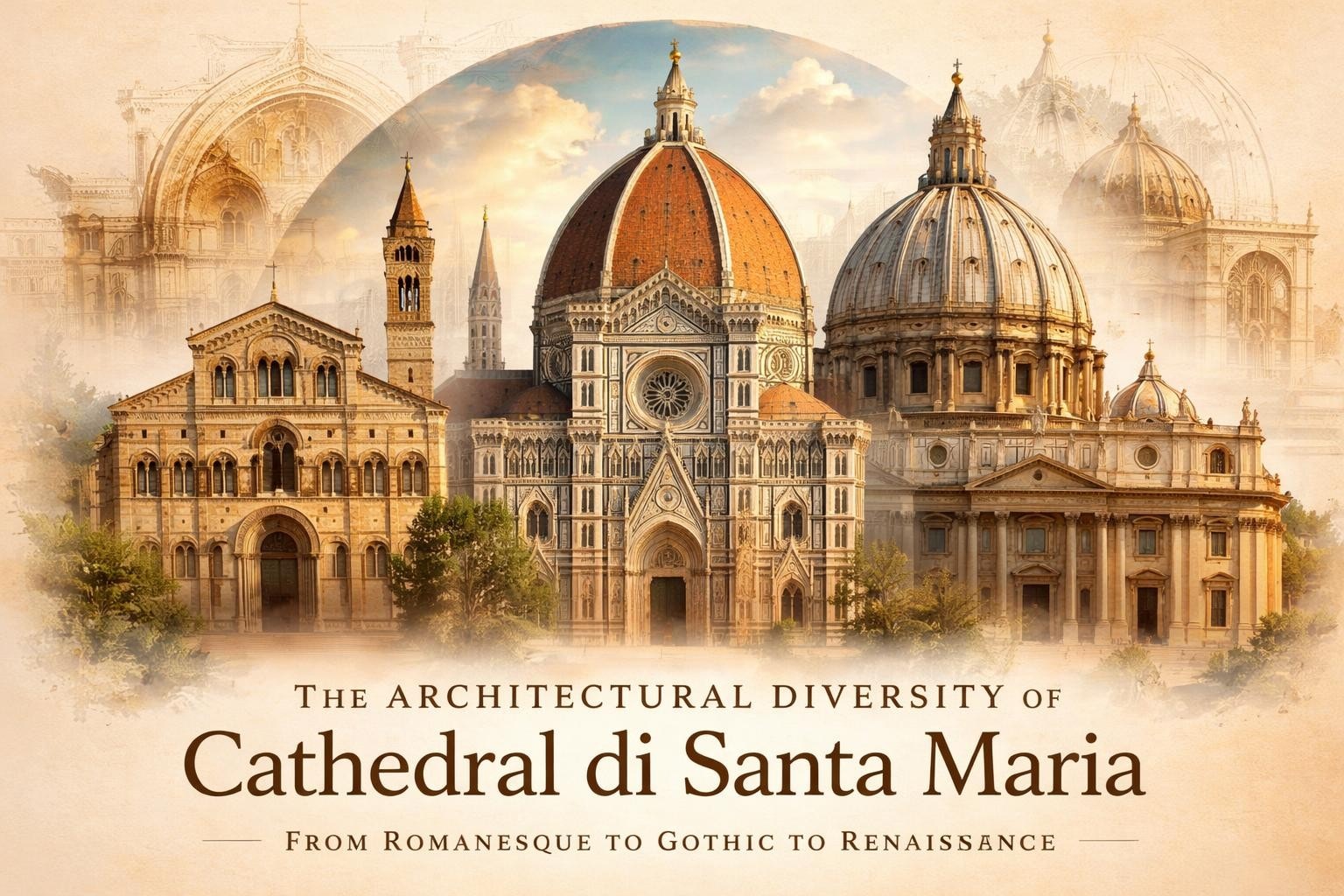
The cathedral di santa maria represents one of Italy's most recurring and significant architectural dedications, with stunning examples spanning from Florence to Pisa, Siena to Sardinia. These magnificent churches, each bearing the name of the Virgin Mary, showcase centuries of Italian artistic achievement, architectural innovation, and religious devotion. Understanding the cathedral di santa maria tradition offers visitors insight into Italy's cultural heritage and provides context for experiencing some of the country's most breathtaking sacred spaces. Whether you're planning a visit to Florence's iconic Duomo or exploring lesser-known regional treasures, these cathedrals represent the pinnacle of Italian ecclesiastical architecture.
Architectural Significance of Cathedral di Santa Maria
The cathedral di santa maria designation appears across Italy with remarkable frequency, yet each structure maintains distinctive characteristics reflecting its regional context and construction period. These cathedrals served as focal points for urban development, religious life, and artistic patronage throughout medieval and Renaissance Italy.
Defining Architectural Features
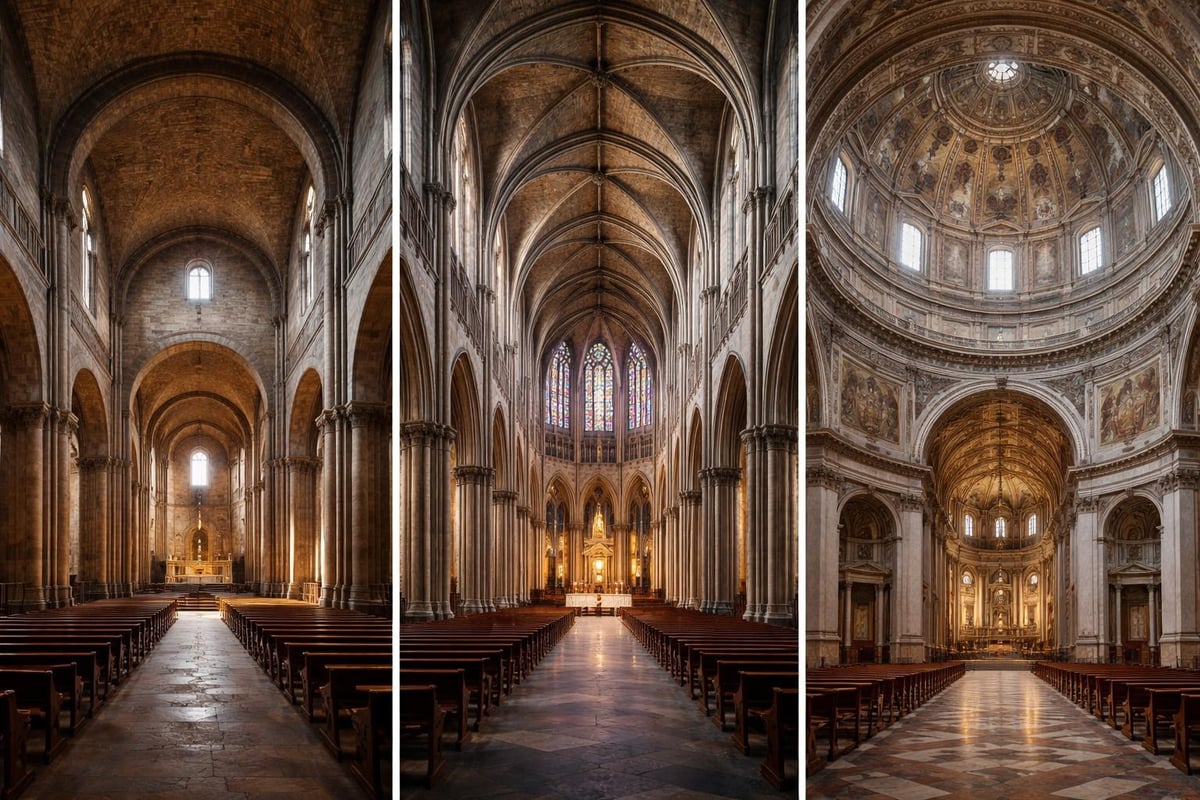
Italian cathedrals dedicated to Santa Maria demonstrate extraordinary architectural diversity while sharing common structural elements. The typical cathedral di santa maria incorporates a cruciform floor plan, with a central nave flanked by side aisles, transepts creating the cross shape, and an apse containing the main altar. These fundamental components allowed for liturgical functions while accommodating large congregations during important feast days and civic ceremonies.
Key architectural elements include:
- Facade designs ranging from Romanesque arcading to Gothic pointed arches
- Interior column systems supporting vaulted ceilings
- Dome structures crowning the intersection of nave and transept
- Bell towers (campaniles) functioning as vertical landmarks
- Baptisteries often constructed as separate octagonal buildings
The Cathedral of Santa Maria Assunta in Pisa exemplifies the Romanesque Pisan style with its distinctive striped marble facade, while Florence's cathedral di santa maria del fiore represents the evolution toward Gothic and Renaissance innovations. These architectural choices reflected theological concepts, with verticality symbolizing spiritual aspiration and light representing divine presence.
Florence's Cathedral di Santa Maria del Fiore
Among all cathedrals bearing the Santa Maria dedication, Florence's Cathedral of Santa Maria del Fiore stands as perhaps the most architecturally ambitious and historically significant. Begun in 1296 under the direction of Arnolfo di Cambio, this cathedral di santa maria transformed Florence's skyline and demonstrated the city's economic power and artistic sophistication.
Brunelleschi's Revolutionary Dome
The cathedral's crowning achievement remains Filippo Brunelleschi's dome, completed in 1436 after sixteen years of construction. This engineering marvel solved a problem that had challenged architects for decades: how to construct a dome spanning 140 feet without traditional wooden scaffolding. Brunelleschi's innovative double-shell design, with an inner and outer dome connected by ribs, created a self-supporting structure that remains the world's largest masonry dome.
The construction process involved revolutionary techniques including:
- A herringbone brick pattern providing structural stability
- Progressively smaller stone rings as the dome curved inward
- An octagonal drum supporting the dome's weight
- Internal passageways allowing maintenance access
- A lantern at the apex admitting light and completing the vertical thrust
Visitors can explore the cathedral’s interior artworks including Giorgio Vasari's Last Judgment fresco covering the dome's interior, viewing approximately 3,600 square meters of painting depicting paradise, hell, and purgatory. The cathedral di santa maria del fiore required 140 years to complete, with the facade finished only in 1887, yet it established Florence as a center of Renaissance innovation.
Planning Your Cathedral Visit
Experiencing the cathedral di santa maria del fiore requires advance planning due to its popularity among international visitors. The complex includes the cathedral itself, Brunelleschi's dome climb, Giotto's Bell Tower, the Baptistery, and the Opera Museum, each offering distinct perspectives on Florentine artistic achievement.
| Component | Highlights | Visit Duration |
|---|---|---|
| Cathedral Interior | Vasari frescoes, marble floors, octagonal nave | 30-45 minutes |
| Dome Climb | 463 steps, panoramic city views, close-up frescoes | 45-60 minutes |
| Bell Tower | 414 steps, architectural details, alternative viewpoint | 40-50 minutes |
| Baptistery | Byzantine mosaics, Ghiberti's bronze doors | 20-30 minutes |
Those seeking comprehensive access can utilize a combined ticket for Giotto’s Bell Tower and Cathedral which streamlines entry and maximizes time efficiency. The cathedral di santa maria del fiore welcomes visitors free of charge to the main sanctuary, though climbing the dome or bell tower requires timed tickets often selling out weeks in advance during peak tourist seasons.
Regional Variations in Cathedral di Santa Maria Design
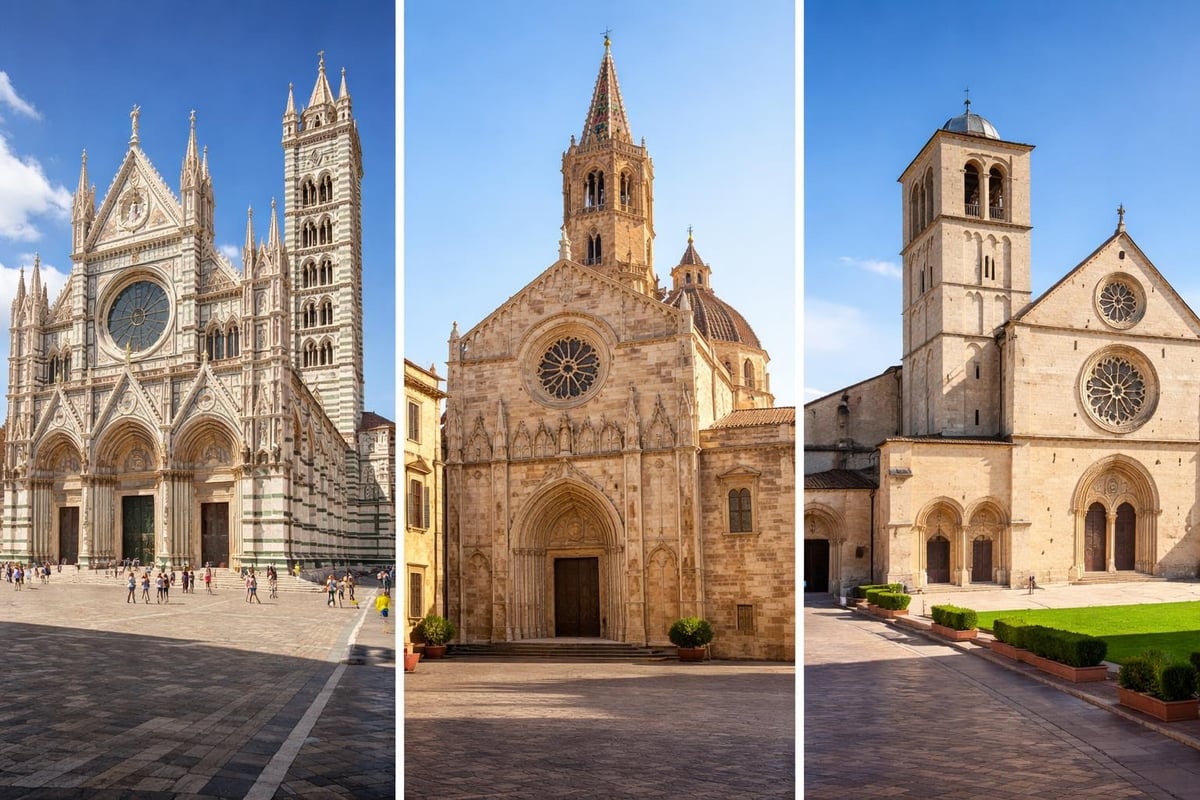
Beyond Florence, Italy's cathedral di santa maria churches reflect regional architectural traditions, local materials, and distinct historical influences. These variations demonstrate how a common dedication produced remarkably diverse artistic expressions across the Italian peninsula.
Siena's Striped Marvel
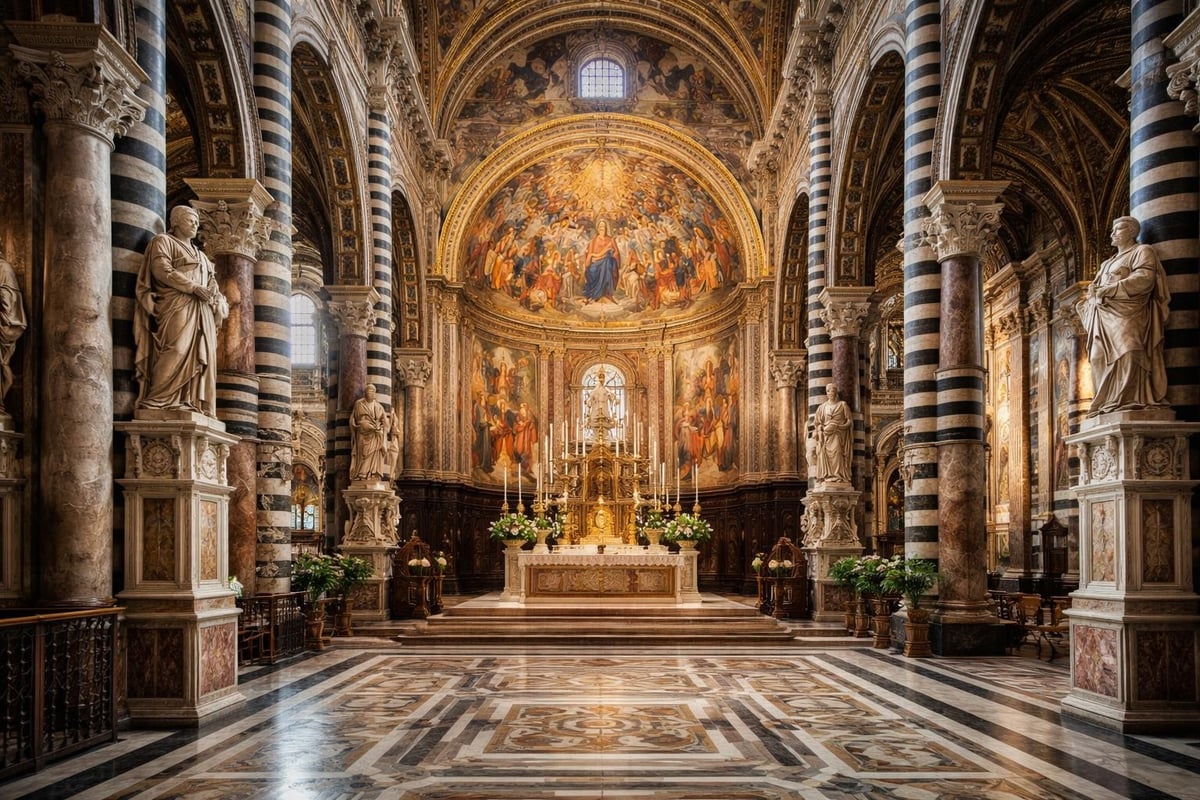
The Cathedral of Santa Maria Assunta in Siena presents a stunning Romanesque-Gothic synthesis, constructed between 1215 and 1263. This cathedral di santa maria features distinctive horizontal bands of white and greenish-black marble creating a zebra-striped effect throughout the exterior and interior.
Notable artistic features include:
- Nicola Pisano's elaborate pulpit carved from Carrara marble
- Inlaid marble floor panels depicting biblical and allegorical scenes
- Piccolomini Library with frescoes by Pinturicchio
- Michelangelo's sculptural contributions in the Piccolomini Altar
- Bernini's chapel dedicated to the Madonna del Voto
The cathedral's unfinished expansion, known as the "New Cathedral," would have created the largest church in Christendom had the Black Death not decimated Siena's population in 1348. Today, the surviving walls and columns of this ambitious project stand as testament to medieval civic pride.
Artistic Treasures Within Cathedral di Santa Maria Churches
The cathedral di santa maria tradition fostered extraordinary artistic patronage, with wealthy families, guilds, and church authorities commissioning masterpieces from Italy's greatest artists. These sacred spaces became galleries showcasing painting, sculpture, metalwork, and textile arts spanning centuries.
Sculptural Programs
Cathedral sculpture served didactic purposes, teaching biblical narratives and theological concepts to largely illiterate medieval populations. The cathedral di santa maria in various cities developed distinctive sculptural programs reflecting local artistic workshops and patron preferences.
Portal sculptures typically depicted:
- Christ in majesty surrounded by evangelists and apostles
- Virgin Mary enthroned as Queen of Heaven
- Local saints and martyrs specific to each city
- Last Judgment scenes warning of consequences for sin
- Prophets and patriarchs from Old Testament narratives
Ghiberti's "Gates of Paradise" for Florence's Baptistery, though technically separate from the cathedral proper, demonstrate the sculptural ambition associated with cathedral di santa maria complexes. These gilded bronze doors required twenty-seven years to complete and established new standards for perspective in relief sculpture.
Fresco Cycles and Panel Paintings
Interior frescoes transformed cathedral walls into visual sermons, with vast cycles depicting salvation history from Creation through Apocalypse. The cathedral di santa maria del fiore's dome frescoes represent only one example of this tradition, with other Italian cathedrals developing equally impressive painted programs.
| Cathedral Location | Primary Fresco Artist | Subject Matter | Completion Date |
|---|---|---|---|
| Florence | Giorgio Vasari | Last Judgment | 1579 |
| Pisa | Buonamico Buffalmacco | Triumph of Death | 1336-1341 |
| Siena | Various artists | Biblical narratives | 14th-15th centuries |
| Urbino | Federico Barocci | Baroque religious scenes | 16th century |
Panel paintings adorned side altars, with wealthy families endowing chapels and commissioning altarpieces from prominent masters. The cathedral di santa maria thus functioned not merely as a worship space but as a public art museum accessible to all social classes.
Cathedral di Santa Maria Beyond Tuscany
While Tuscany boasts the most famous examples, the cathedral di santa maria dedication extends throughout Italy, with significant structures in Sardinia, Umbria, Lazio, and other regions. These cathedrals adapted architectural forms to local contexts while maintaining the essential character of Italian ecclesiastical architecture.
Sardinian Interpretations
Sardinia's cathedral di santa maria churches reflect the island's unique cultural synthesis, blending Italian mainland influences with Spanish Gothic elements from centuries of Aragonese rule. The Cathedral of Santa Maria in Alghero demonstrates this fusion, with its Gothic-Catalan base later modified with Renaissance and Neoclassical additions.
The Cathedral of Santa Maria Assunta in Oristano represents Sardinia's largest cathedral, rebuilt multiple times following earthquakes and wars. This cathedral di santa maria combines Romanesque elements in its lower sections with Gothic vaulting and Baroque decorative details, creating a layered architectural history readable in stone and plaster.
Umbrian Examples
The Cathedral of Santa Maria Assunta in Urbino showcases Francesco di Giorgio Martini's Renaissance design, replacing an earlier Romanesque structure destroyed in an earthquake. This cathedral di santa maria demonstrates how architectural styles evolved, with classical proportions and symmetry replacing medieval verticality and elaborate ornamentation.
Key Renaissance characteristics include:
- Centralized planning principles deriving from ancient Roman architecture
- Dome construction using precise mathematical calculations
- Facade harmony through balanced proportions and rhythmic pilaster placement
- Interior unity achieved through consistent decorative schemes
- Natural light emphasis through larger windows and lighter color palettes
These regional variations demonstrate that the cathedral di santa maria represented not a fixed architectural formula but an adaptable tradition responding to local needs, resources, and aesthetic preferences.
Visiting Cathedral di Santa Maria: Practical Information
Modern visitors to any cathedral di santa maria should prepare for both spiritual and cultural experiences. These remain active places of worship alongside their roles as tourist attractions, requiring respectful behavior and appropriate attire.
Dress Code and Etiquette
All Italian cathedrals enforce dress codes reflecting their sacred function. Visitors must ensure:
- Shoulders covered (no tank tops or sleeveless shirts)
- Knees covered (shorts and short skirts prohibited)
- Hats removed upon entering
- Quiet voices maintained inside
- Photography without flash and only where permitted
- Restricted access during Mass and religious ceremonies
Many cathedrals provide disposable coverings for those arriving in inappropriate attire, though planning ahead ensures smoother entry. The cathedral di santa maria del fiore in Florence strictly enforces these requirements given its high visitor volume, with security staff turning away improperly dressed tourists daily.
Optimal Visiting Times
Timing significantly impacts the cathedral di santa maria experience. Early morning visits offer:
- Smaller crowds allowing closer examination of artworks
- Better natural lighting for photography and viewing frescoes
- Cooler temperatures during summer months
- More peaceful atmosphere conducive to contemplation
- Greater flexibility in movement throughout the space
Late afternoon provides dramatic lighting effects as sun streams through stained glass and highlights architectural details. However, many cathedrals close by 5:00 or 6:00 PM, limiting this window. Mid-morning and early afternoon typically see peak crowding as tour groups arrive.
Audio Guides and Expert Tours
Understanding the cathedral di santa maria's historical and artistic significance requires contextual information rarely apparent from casual observation. Audio-guided cathedral tours provide detailed explanations at individual paces, covering architectural evolution, artistic masterpieces, and historical events associated with each structure.
Professional guided tours offer advantages including:
- Expert commentary from art historians and architectural specialists
- Access to restricted areas sometimes unavailable to general visitors
- Contextualization connecting cathedral development to broader historical trends
- Opportunity for questions and detailed discussions
- Skip-the-line privileges during peak tourist seasons
EU Tours specializes in comprehensive Florence experiences, offering visitors the expertise needed to fully appreciate the cathedral di santa maria del fiore's complexity. Their guides illuminate connections between the cathedral and other Florentine landmarks, creating coherent narratives about Renaissance artistic achievement.
Comparative Analysis of Major Examples
Examining multiple cathedral di santa maria structures reveals both commonalities and distinctive innovations, helping visitors appreciate what makes each example unique while understanding shared architectural and artistic traditions.
Architectural Timeline
| Cathedral | Construction Began | Completion | Dominant Style | Notable Innovation |
|---|---|---|---|---|
| Pisa | 1063 | 1118 | Romanesque | Striped marble facade |
| Siena | 1215 | 1263 | Romanesque-Gothic | Inlaid marble floors |
| Florence | 1296 | 1436 (dome) | Gothic-Renaissance | Brunelleschi's dome |
| Urbino | 1474 | 1604 | Renaissance | Classical proportions |
This chronology demonstrates evolving architectural preferences across four centuries, with earlier structures emphasizing horizontal massing and rounded arches, while later examples incorporated vertical thrust, pointed arches, and mathematical precision. Each cathedral di santa maria represents the cutting edge of contemporary architectural theory and engineering capability.
Artistic Commission Patterns
Cathedral decoration required massive financial investment coordinated across generations. The cathedral di santa maria model typically involved:
- Initial funding from municipal governments and wealthy families
- Ongoing support from cathedral building committees (Opera del Duomo)
- Guild contributions tied to specific chapels or architectural elements
- Papal indulgences granted to donors supporting construction
- Endowments establishing perpetual income streams
Florence's cathedral finances were particularly well-documented, with the Arte della Lana (wool guild) assuming responsibility in 1331 and maintaining detailed expenditure records. These documents reveal the cathedral di santa maria del fiore consumed approximately 40% of Florence's public works budget during peak construction decades.
Conservation Challenges and Modern Interventions
Twenty-first-century stewards of cathedral di santa maria structures face unprecedented conservation challenges. Atmospheric pollution, climate change, mass tourism, and material aging threaten these irreplaceable monuments.
Environmental Threats
Modern pollution creates acid rain that erodes marble surfaces and deteriorates fresco pigments. The cathedral di santa maria del fiore's white marble facade has required extensive cleaning and consolidation treatments to reverse centuries of accumulated grime and chemical damage. Conservators use laser technology and specialized chemical treatments to remove harmful deposits without damaging original stone.
Primary conservation concerns include:
- Water infiltration causing structural instability and fresco detachment
- Tourist traffic generating vibrations affecting fragile decorative elements
- Temperature and humidity fluctuations stressing historic materials
- Biological growth (algae, lichens, bacteria) colonizing porous stone surfaces
- Urban development altering groundwater patterns and foundation stability
Climate-controlled environments protect the most vulnerable artworks, with original door panels, detached frescoes, and delicate manuscripts relocated to museum settings. The cathedral di santa maria thus increasingly functions as an architectural shell, with moveable artworks transferred to controlled repositories.
Balancing Access and Preservation
Cathedral administrators navigate tensions between public access and preservation imperatives. Visitor caps, timed entry systems, and restricted photography represent attempts to manage tourism impacts while maintaining these structures' public mission. The cathedral di santa maria del fiore implemented mandatory reservations for dome climbing in 2015, reducing daily visitors from over 3,000 to a more manageable 1,200 while improving visitor experiences through reduced crowding.
Advanced booking systems allow heritage sites to distribute visitor loads throughout operating hours, preventing the concentrated rushes that accelerate wear on marble stairs, floor surfaces, and structural elements. Those planning Italian cathedral visits should embrace these systems, recognizing them as essential tools for ensuring future generations can enjoy these treasures.
The Cathedral di Santa Maria in Contemporary Faith Practice
Despite their status as tourist attractions and artistic monuments, cathedral di santa maria churches remain active centers of Catholic worship. Understanding their ongoing religious functions enriches visitor experiences and demonstrates how sacred spaces adapt to contemporary needs while maintaining historical continuity.
Liturgical Calendar and Special Celebrations
The cathedral di santa maria designation connects these structures to Marian feast days celebrated throughout the Catholic liturgical year. Major observances include:
- The Annunciation (March 25) commemorating Gabriel's announcement to Mary
- The Assumption (August 15) celebrating Mary's bodily assumption into heaven
- The Immaculate Conception (December 8) honoring Mary's conception without original sin
- The Nativity of Mary (September 8) marking Mary's birth
- Our Lady of Sorrows (September 15) reflecting on Mary's suffering
These celebrations feature elaborate liturgies with processional elements, special music, and enhanced decorations. The cathedral di santa maria becomes particularly meaningful during these occasions, when religious significance takes precedence over touristic functions.
Community Engagement
Modern Italian cathedrals extend beyond Sunday Mass to encompass social services, cultural programming, and educational initiatives. Cathedral di santa maria complexes often include:
- Diocesan museums preserving ecclesiastical art and historic vestments
- Archives maintaining centuries of baptismal, marriage, and burial records
- Concert halls hosting sacred music performances and organ recitals
- Educational programs teaching art history and religious studies
- Community outreach supporting local charitable organizations
This multifaceted mission ensures cathedral di santa maria structures remain vital community institutions rather than museum pieces frozen in historical time. Visitors who attend concerts or exhibitions gain deeper appreciation for how these spaces continue serving the purposes for which they were originally constructed.
The cathedral di santa maria represents centuries of Italian artistic achievement, architectural innovation, and religious devotion across diverse regional contexts. Whether exploring Florence's iconic Duomo, Pisa's Romanesque masterpiece, or lesser-known regional treasures, understanding these cathedrals enriches any Italian cultural journey. EU Tours provides expert-guided experiences and convenient skip-the-line access to Florence's cathedral complex, ensuring visitors maximize their time while gaining insights that transform sightseeing into meaningful cultural engagement.
