
Palazzo Vecchio Tour: Complete Guide to Florence’s Icon
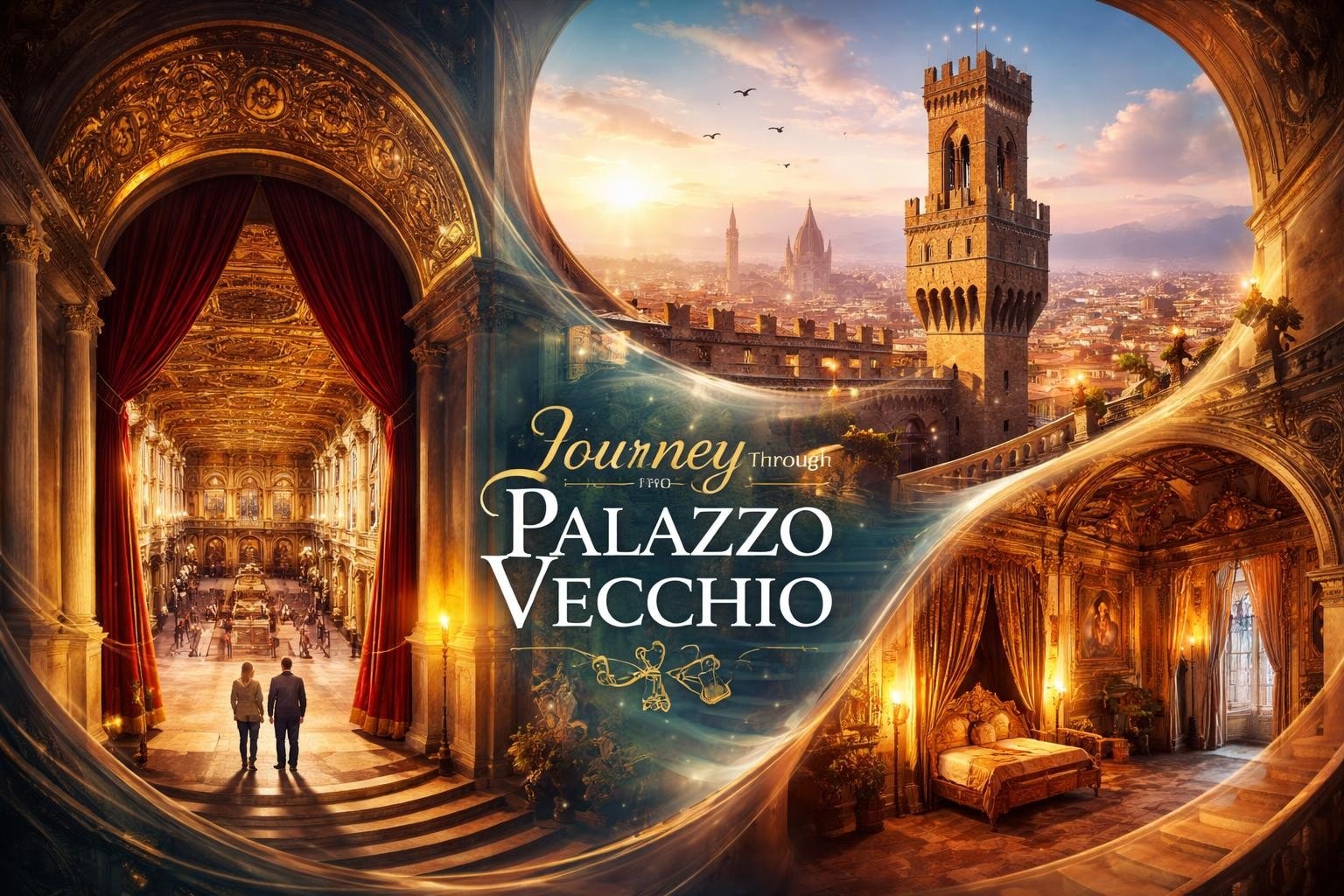
Standing proud in Florence's Piazza della Signoria since the late 13th century, Palazzo Vecchio represents more than just a historic building. It serves as the beating heart of Florentine political history and houses some of the Renaissance's most extraordinary artistic achievements. A palazzo vecchio tour offers visitors an immersive journey through six centuries of art, power, and intrigue, revealing the secrets of the Medici family and the republic they ruled. Whether you're interested in Renaissance masterpieces, architectural marvels, or the political machinations that shaped modern Europe, this fortress-palace delivers an unforgettable experience that brings Florence's golden age to life.
Understanding Palazzo Vecchio's Historical Significance
The palace's construction began in 1299, designed by Arnolfo di Cambio as the seat of the Signoria of the Republic of Florence. Originally named Palazzo della Signoria, this imposing structure served as the government's headquarters during Florence's most influential period. The fortress-like appearance wasn't merely aesthetic but practical, as political tensions frequently erupted into violence during medieval times.
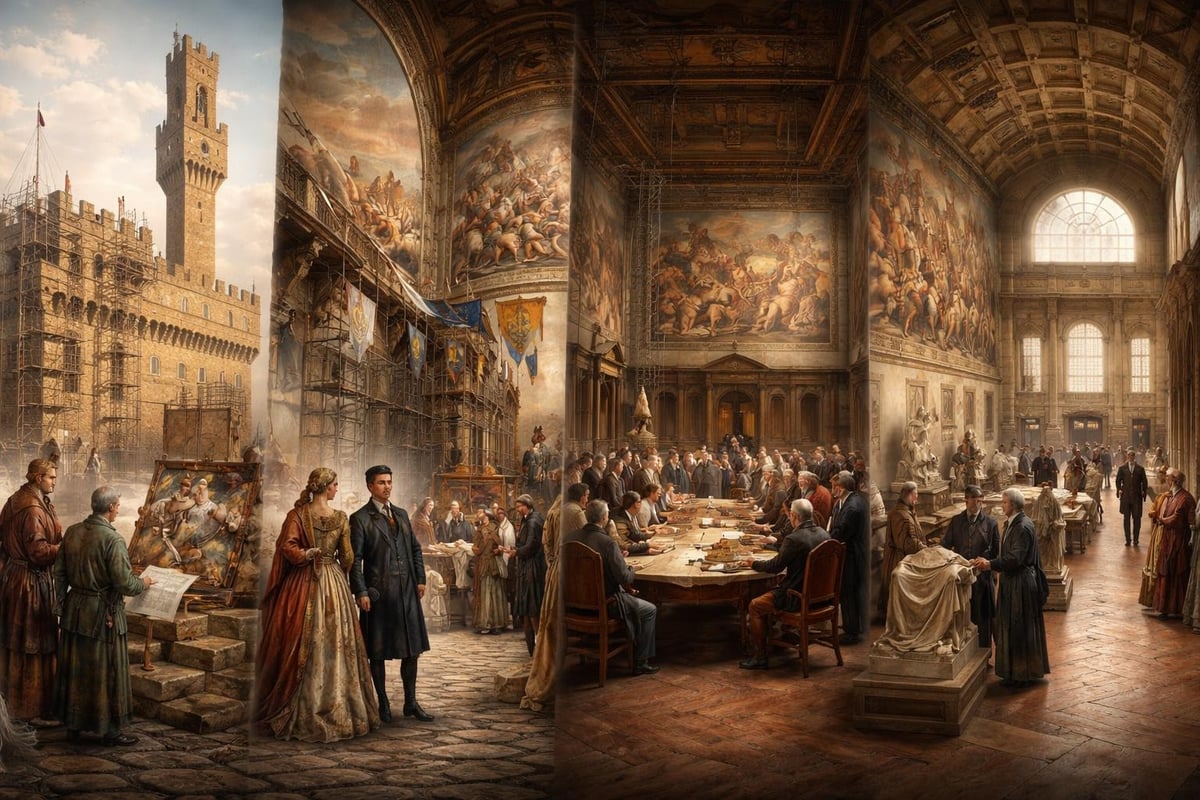
When Cosimo I de' Medici moved his official residence here in 1540, the palace underwent massive renovations under Giorgio Vasari's direction. The transformation from government building to ducal palace created the magnificent interiors visitors marvel at today. The Palazzo Vecchio’s architectural evolution reflects the shifting power dynamics of Renaissance Florence, with each successive ruler leaving their mark through artistic commissions and structural modifications.
The Medici Influence on Palace Design
The Medici family's occupation fundamentally altered the building's character. Previously austere government chambers became opulent living quarters adorned with frescoes, tapestries, and elaborate decorative schemes. This transformation makes a palazzo vecchio tour particularly fascinating because visitors witness both the republican and ducal periods within the same structure.
The family's private apartments reveal intimate details about Renaissance court life. Eleanor of Toledo's chambers showcase the luxury afforded to the duchess, while Francesco I's studiolo represents one of the period's most exquisite small rooms, featuring paintings by prominent Mannerist artists arranged in a complex iconographic program.
Essential Highlights on a Palazzo Vecchio Tour
Every palazzo vecchio tour includes several must-see areas that define the visitor experience. Understanding these spaces helps maximize your time and appreciation of this complex monument. The sheer scale and richness of the palace can overwhelm first-time visitors, so knowing the highlights ensures you don't miss the most significant treasures.
Salone dei Cinquecento
The Hall of the Five Hundred stands as the palace's most impressive space. Created in 1494 to accommodate the Grand Council of the Republic, this massive chamber measures 54 meters long and 23 meters wide. Vasari's ceiling frescoes celebrate Cosimo I's military victories over Pisa and Siena, while the walls feature enormous battle scenes.
Key features include:
- The raised platform where Cosimo I's throne once stood
- Michelangelo's "Genius of Victory" sculpture
- Six monumental statues representing the Labors of Hercules
- Elaborate coffered ceiling with 39 painted panels
- Hidden room behind Vasari's Battle of Marciano fresco (subject of ongoing research)
The hall serves as a powerful reminder of Florence's republican heritage and the political significance of Palazzo Vecchio throughout Italian history.
The Studiolo of Francesco I
This tiny jewel box of a room contrasts dramatically with the Salone's vastness. Created between 1570 and 1575, Francesco I's studiolo functioned as a private study and cabinet of curiosities. The windowless chamber features 34 paintings by various Mannerist artists, each illustrating different aspects of nature, science, and mythology.
The sophisticated iconographic program reflects Francesco's intellectual interests in alchemy, natural history, and rare artifacts. Bronze statuettes by Giambologna occupy niches between the paintings, creating a unified decorative scheme that represents Renaissance humanism at its peak.
Planning Your Palazzo Vecchio Tour Experience
| Tour Type | Duration | Best For | Key Benefits |
|---|---|---|---|
| Skip-the-Line Entry | Self-paced | Independent explorers | Flexibility, budget-friendly |
| Audio-Guided Visit | 90-120 minutes | Solo travelers, couples | Detailed information at your pace |
| Small Group Tour | 90 minutes | Social learners | Expert insights, questions answered |
| Private Guided Tour | 2-3 hours | Families, enthusiasts | Customized focus, exclusive attention |
A standard palazzo vecchio tour typically covers the main ceremonial rooms, private apartments, and Arnolfo Tower if physically able. However, the palace contains numerous secret passages, hidden rooms, and lesser-known chambers that specialized tours can access.
Timing Your Visit
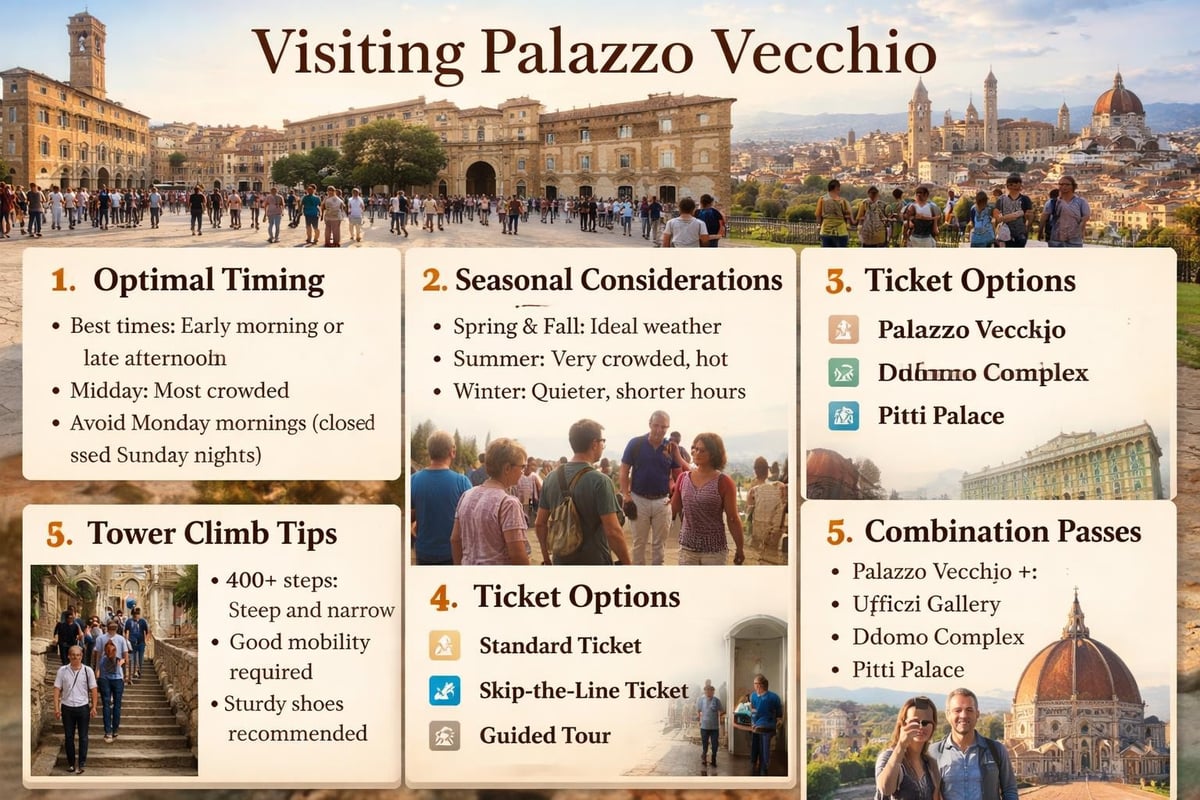
Strategic timing significantly impacts your experience. Summer months bring peak crowds, particularly between 10 AM and 2 PM. Early morning visits (immediately after opening) or late afternoon slots offer quieter conditions for photography and contemplation.
The palace's multiple levels and staircases require moderate fitness. Visitors should allocate at least two hours for a comprehensive experience, though art enthusiasts could easily spend half a day exploring the collections. The architectural features of Palazzo Vecchio alone warrant extended observation.
Exploring the Private Apartments
The quarters of Eleonora di Toledo, wife of Cosimo I, provide intimate glimpses into Renaissance court life. Her chapel, decorated by Bronzino, features stunning frescoes that demonstrate the Mannerist style at its finest. The small scale and exquisite detail demand close observation during your palazzo vecchio tour.
Adjacent rooms include:
- The Green Room, serving as an antechamber
- The Chamber of the Sabines with mythological frescoes
- The Chamber of Esther featuring Old Testament scenes
- The Chamber of Penelope celebrating female virtue
- The Gualdrada Room honoring a legendary Florentine woman
Each chamber follows a specific iconographic program designed to celebrate feminine virtue and noble behavior. The decorative schemes reveal how the Medici used art to communicate political messages and establish legitimacy.
The Apartments of the Elements
On the palace's second floor, five rooms dedicated to the classical elements showcase Vasari's workshop at full capacity. These chambers created for Cosimo I balance the feminine apartments below, establishing a cosmic harmony between masculine and feminine, earthly and celestial.
The elaborate allegorical programs require interpretation to fully appreciate. Saturn's Terrace offers spectacular views over Florence, making it a favorite stop on comprehensive tours. The juxtaposition of mythological themes with Medici family portraits demonstrates how Renaissance patrons appropriated classical imagery for contemporary political purposes.
Special Features and Hidden Treasures
Beyond the main ceremonial spaces, Palazzo Vecchio contains numerous specialized areas that reward curious visitors. The palace's transformation from government building to museum preserved many unique features that other Florentine palaces lost during renovations.
Secret Passages and Hidden Rooms
Duke Francesco I commissioned several secret corridors and concealed chambers throughout the palace. Some connected his studiolo to private laboratories where he conducted alchemical experiments. Others provided escape routes during political crises, a practical necessity during turbulent times.
Modern palazzo vecchio tour options increasingly include access to these spaces, subject to advance booking and group size limitations. The passages reveal the paranoid political climate of Renaissance Florence and the constant threat of assassination or uprising that rulers faced.
The Arnolfo Tower
Climbing the 418 steps to the tower's top rewards visitors with panoramic views across Florence and the surrounding Tuscan countryside. The tower stands 94 meters tall, making it one of the city's most prominent landmarks. The climb passes through the ancient prison cells where prominent political prisoners, including Cosimo the Elder before his exile, were held.
Weather permitting, the tower offers unobstructed views of:
- The Duomo and Brunelleschi's dome
- The Arno River and Ponte Vecchio
- San Miniato al Monte on the hillside
- The Uffizi Gallery courtyard
- Piazza della Signoria directly below
The physical challenge of the ascent means not all palazzo vecchio tour participants choose this option, but those who do consistently rank it as a highlight.
Artistic Masterpieces Within the Palace
The palace functions as both historical monument and art museum, with works spanning several centuries. While not as extensive as the nearby Uffizi, the collection includes significant pieces by major Renaissance masters. The integration of art with architecture creates an immersive environment that separate museum galleries cannot replicate.
Sculpture Collection
| Artist | Work | Location | Significance |
|---|---|---|---|
| Donatello | Judith and Holofernes | Salone dei Cinquecento | Originally Medici Palace, political symbolism |
| Michelangelo | Genius of Victory | Salone dei Cinquecento | Unfinished work for Julius II's tomb |
| Verrocchio | Putto with Dolphin | Courtyard (copy) | Original in palace interior, fountain sculpture |
| Giambologna | Bronze statuettes | Studiolo | Integrated decorative program |
The sculptures serve both decorative and ideological functions. Judith and Holofernes, depicting a woman beheading a tyrant, symbolized republican liberty when installed in the piazza. After Medici restoration, it moved inside, demonstrating how art's meaning shifts with political context.
Fresco Cycles
Vasari's workshop produced thousands of square meters of frescoes throughout the palace during the 1560s and 1570s. The speed of execution sometimes sacrificed quality for coverage, but the overall effect remains impressive. The ceiling of the Salone dei Cinquecento alone contains 39 separate panels arranged in a complex hierarchical program glorifying Cosimo I.
Other significant fresco cycles appear in the private apartments, where mythological and historical scenes create continuous narratives across walls and ceilings. During your palazzo vecchio tour, guides can explain the iconographic programs that contemporary viewers would have understood immediately but modern visitors often miss.
Practical Considerations for Visitors
Understanding logistical details ensures a smooth palazzo vecchio tour experience. The palace operates as both working government building (Florence's city hall occupies portions) and museum, creating unique access patterns. EU Tours specializes in navigating these complexities through skip-the-line access and expert guidance.
Accessibility and Special Needs
The medieval structure presents challenges for visitors with mobility limitations. An elevator provides access to the first floor, but many areas remain accessible only via stairs. The tower climb specifically requires good physical condition and isn't recommended for those with heart conditions, vertigo, or claustrophobia.
Families with young children should note that strollers aren't permitted in most areas. Baby carriers work better for navigating the narrow passages and staircases. The palace does offer family-friendly tours designed to engage younger visitors through interactive activities and storytelling approaches.
Photography Policies
Photography without flash is generally permitted in most palace areas, though special exhibitions may impose restrictions. The studiolo's small size and low lighting make photography challenging without tripods, which aren't allowed. Professional photography and video recording require advance permission and potentially additional fees.
Social media enthusiasts will find countless photogenic spots, from the ornate coffered ceilings to the tower views. The courtyard, redesigned by Michelozzo with Vasari additions, provides particularly striking architectural photography opportunities with its decorated columns and Verrocchio fountain.
Combining Your Palazzo Vecchio Tour with Other Attractions
Florence's compact historic center allows efficient combination of multiple attractions. Palazzo Vecchio's location in Piazza della Signoria positions it perfectly for integrated itineraries. The square itself functions as an open-air sculpture gallery with copies of famous works including Michelangelo's David.
Nearby Attractions Within Walking Distance:
- Uffizi Gallery (2-minute walk)
- Ponte Vecchio (5-minute walk)
- Bargello Museum (5-minute walk)
- Santa Croce Basilica (10-minute walk)
- Florence Cathedral complex (8-minute walk)
Many visitors structure their day around a morning palazzo vecchio tour followed by lunch in the surrounding streets and an afternoon at the Uffizi. This combination provides comprehensive exposure to Florentine Renaissance art and political history. The detailed tour itineraries available help visitors understand what each site offers and plan accordingly.
Combination Tickets and Passes
Several ticket options bundle Palazzo Vecchio with other municipal museums. The Museum Card provides access to multiple city-operated venues over five days, offering value for extended stays. However, these cards don't include skip-the-line privileges, which can mean significant time lost during peak season.
Strategic visitors often prioritize skip-the-line access for major attractions like Palazzo Vecchio, the Accademia, and the Uffizi, while using combination passes for smaller venues with shorter queues. Understanding the historical context of Florence’s landmarks helps determine which merit extended visits versus briefer stops.
Seasonal Considerations and Special Events
Palazzo Vecchio hosts various temporary exhibitions and special events throughout the year that can enhance or complicate your palazzo vecchio tour experience. Major exhibitions may close certain rooms or alter normal traffic flow through the palace. However, they also provide opportunities to see rarely displayed works from storage or borrowed pieces from other collections.
Cultural Programming
The palace regularly offers:
- Evening openings with reduced crowds
- Classical music concerts in the Salone dei Cinquecento
- Theatrical performances in period costume
- Educational workshops for all ages
- Themed guided tours focusing on specific aspects
Summer brings extended hours and special programming designed for the tourist season. Winter visits offer a more contemplative atmosphere with significantly fewer crowds, though some areas may close earlier due to reduced visitor numbers.
The palace's role in Florence's annual Historical Parade of the Republic creates unique opportunities to see the building in historical context. Participants in period costume gather in the courtyard before processing through the city, temporarily transforming the space to evoke its original governmental function.
Enhancing Your Understanding Through Expert Guidance
While self-guided visits allow flexibility, expert-led palazzo vecchio tour experiences provide context that transforms beautiful rooms into meaningful historical narratives. Professional guides trained in art history, Renaissance politics, and Florentine culture reveal connections and stories that casual visitors typically miss.
The difference becomes apparent when examining complex works like the studiolo panels. Without guidance, visitors see attractive paintings. With expert interpretation, the sophisticated iconographic program linking the four elements, various deities, and Medici political ambitions becomes comprehensible.
Private tours offer customization based on specific interests. Art enthusiasts can focus on technique and attribution, while history buffs might emphasize political intrigue and the Medici family dynamics. Families with children benefit from guides skilled at making Renaissance history engaging for younger audiences through stories and interactive elements.
Audio Guide Options
For visitors preferring independence with informational support, audio guides provide room-by-room commentary. Multiple language options accommodate international visitors, with content typically updated to reflect current scholarship. The flexibility to pause, replay, or skip sections appeals to many travelers.
However, audio guides lack the responsiveness of live guides who adjust pacing, emphasis, and detail based on group interest and questions. The choice between formats depends on personal learning preferences, budget considerations, and desired depth of engagement with the material.
A palazzo vecchio tour offers unparalleled access to Florence's political and artistic heritage, revealing how power, art, and culture intertwined during the Renaissance. From the monumental Salone dei Cinquecento to the intimate studiolo, every space tells stories of ambition, creativity, and the families who shaped European history. Whether you choose a quick visit focusing on highlights or an in-depth exploration of hidden chambers and symbolic programs, the palace rewards curiosity with discoveries at every turn. EU Tours provides skip-the-line access, expert-guided experiences, and flexible touring options that help you make the most of this extraordinary monument, ensuring your time in Florence includes meaningful engagement with one of Italy's most significant Renaissance palaces.