
Guide to Piazza del Duomo Florence: Explore History in 2026
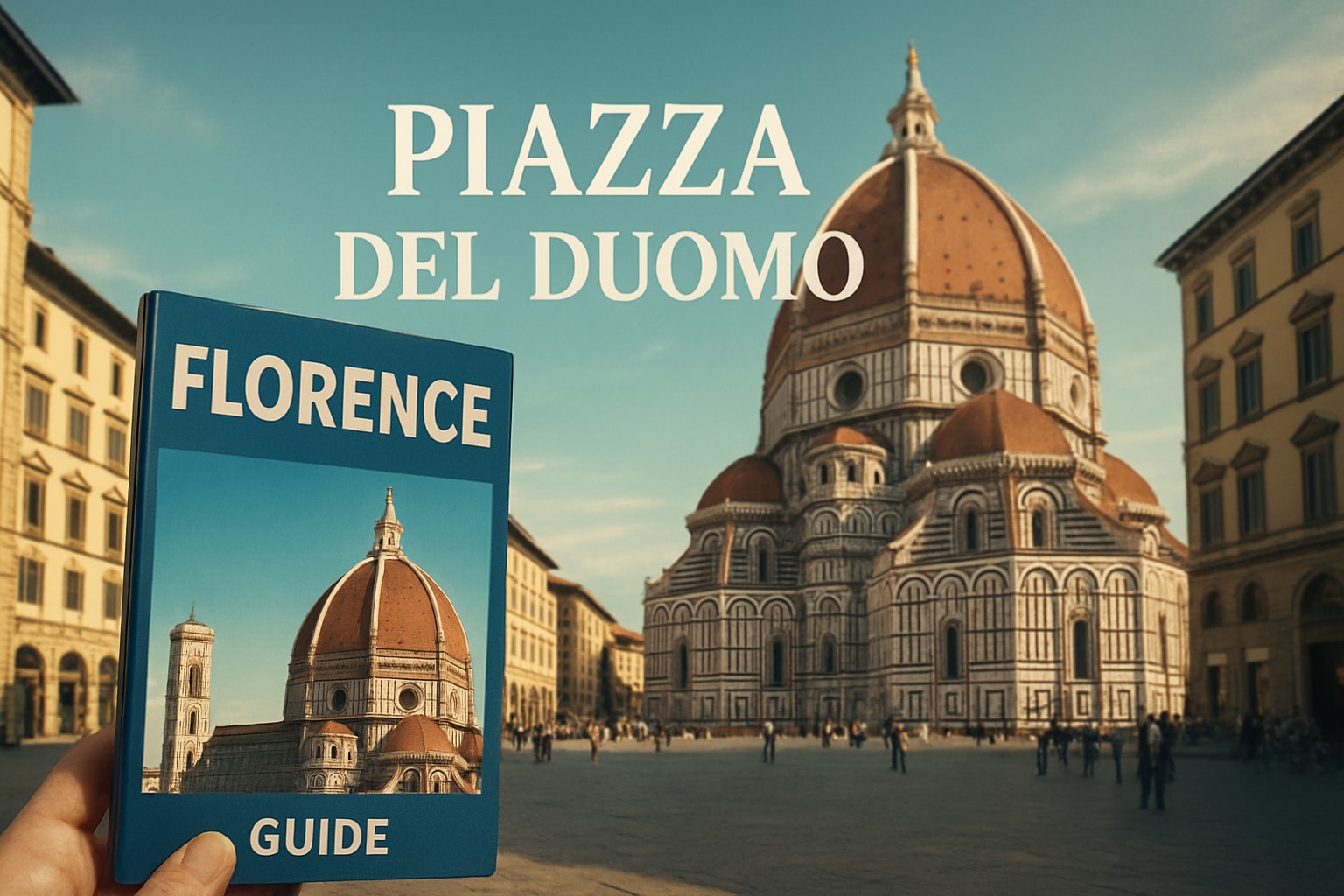
Step into the heart of Florence’s Renaissance legacy at piazza del duomo florence, where centuries of art, architecture, and culture converge in a breathtaking square. Here, the city’s most iconic monuments invite you to explore stories carved in marble and painted in vibrant hues.
This guide offers an immersive journey through piazza del duomo florence, unveiling its rich history, world-renowned masterpieces, and essential tips for experiencing its wonders in 2026. Discover how the square evolved, delve into the treasures of the Cathedral, Baptistery, and Bell Tower, and find hidden gems waiting to be explored.
Envision yourself surrounded by timeless beauty, standing where artists and thinkers once gathered. Begin planning your unforgettable visit and make the most of every moment in Florence’s most celebrated piazza.
The Historical Evolution of Piazza del Duomo
Step into the layered story of piazza del duomo florence, a square where Florence’s identity was shaped over centuries. This iconic site stands as a testament to spiritual, social, and artistic transformation, inviting visitors to trace the city’s journey from its earliest days to its global renown.
Origins and Medieval Foundations
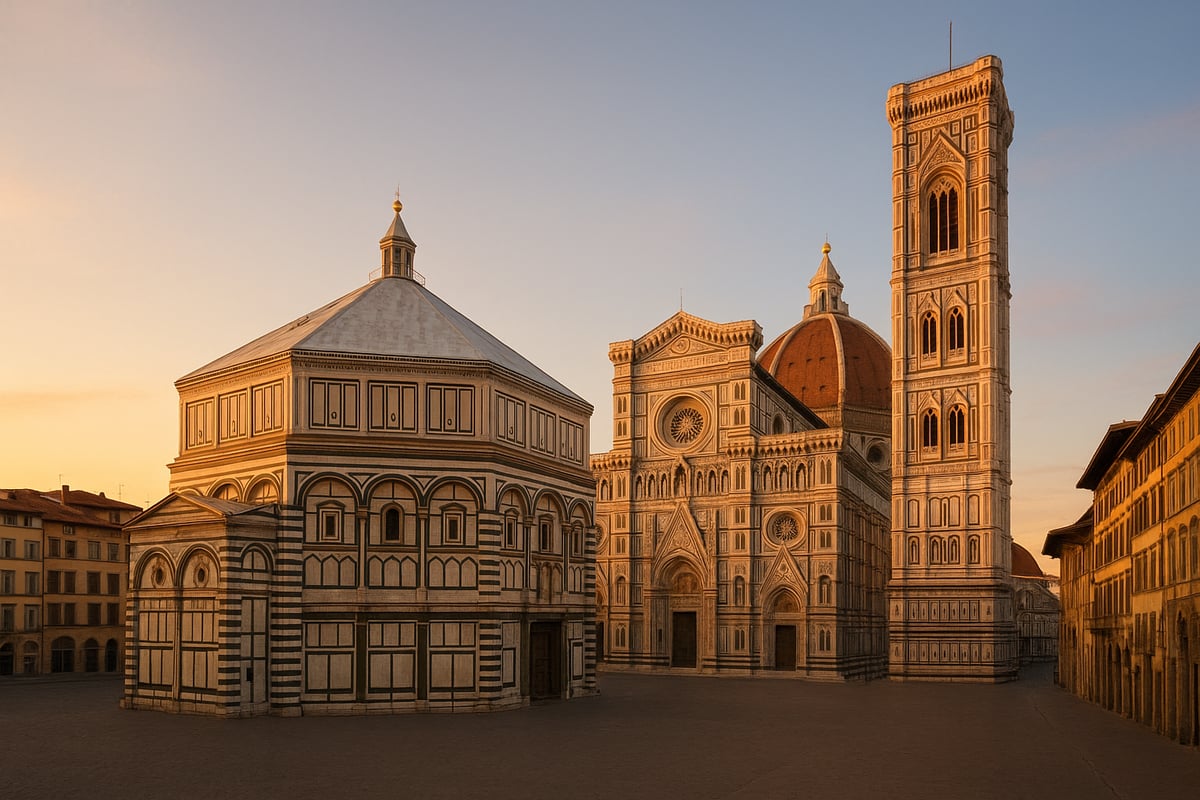
The origins of piazza del duomo florence date back to the northern edge of the ancient Roman city, where the spiritual and civic heart of Florence began to take shape. In the early medieval period, the area became home to the bishop’s palace, the Baptistery, a hospital, a rectory, cemeteries, and numerous small churches. This concentration of sacred buildings established the “sacred axis,” an urban planning concept that guided the city’s religious and architectural development.
Central to this early landscape was the Church of Santa Reparata, one of Florence’s first Christian basilicas. Its remains, now visible beneath the present cathedral, offer tangible evidence of the city’s deep-rooted faith. The layout of the square reflected the medieval worldview, where religious life and communal identity were inseparable.
As Florence grew, piazza del duomo florence became the focal point for processions, gatherings, and ceremonies. The physical and spiritual significance of the site continued to evolve, laying the groundwork for the transformations that would follow. For a more detailed look at these developments, see this overview of the historical development of Piazza del Duomo.
Renaissance Transformations
The Renaissance brought dramatic changes to piazza del duomo florence, beginning in the 13th century. As Florence’s wealth and influence soared, city leaders sought to reflect their ambitions through monumental architecture. Houses and older buildings were cleared to make way for the new cathedral and Giotto’s bell tower, marking a bold new chapter for the square.
Over several centuries, the square was enlarged and its boundaries redefined. The transition from its medieval name, Piazza San Giovanni, to piazza del duomo florence signaled a shift in focus toward the grand cathedral complex. This period saw the rise of masterpieces like Brunelleschi’s dome and the ornate facades that still captivate visitors today.
The square’s expansion mirrored Florence’s transformation into a Renaissance powerhouse. Artisans, architects, and patrons collaborated to create a space that embodied civic pride and artistic achievement. The piazza del duomo florence not only anchored religious life but also became a stage for political events, public gatherings, and celebrations that shaped the city’s legacy.
UNESCO World Heritage Status and Modern Role
Today, piazza del duomo florence is recognized as the spiritual heart of the city and a UNESCO World Heritage Site. Its layered history is celebrated as a symbol of civic unity and artistic innovation. The square has hosted major religious festivals, civic ceremonies, and cultural events that draw people from around the world.
Visitor data highlights its enduring appeal, with millions exploring the cathedral, Baptistery, and bell tower each year. The piazza del duomo florence stands as one of Italy’s most visited destinations, a place where Florence’s medieval roots and Renaissance aspirations converge.
Ultimately, the history of piazza del duomo florence reflects the city’s journey from a modest medieval settlement to a global center of art and culture. Each era has left its mark, inviting new generations to discover the stories etched into every stone.
The Cathedral of Santa Maria del Fiore: Masterpiece of Faith and Engineering
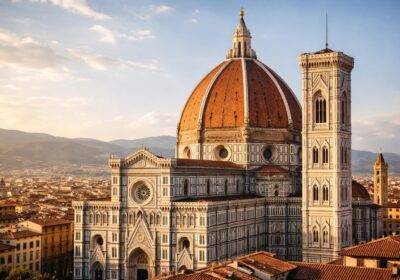
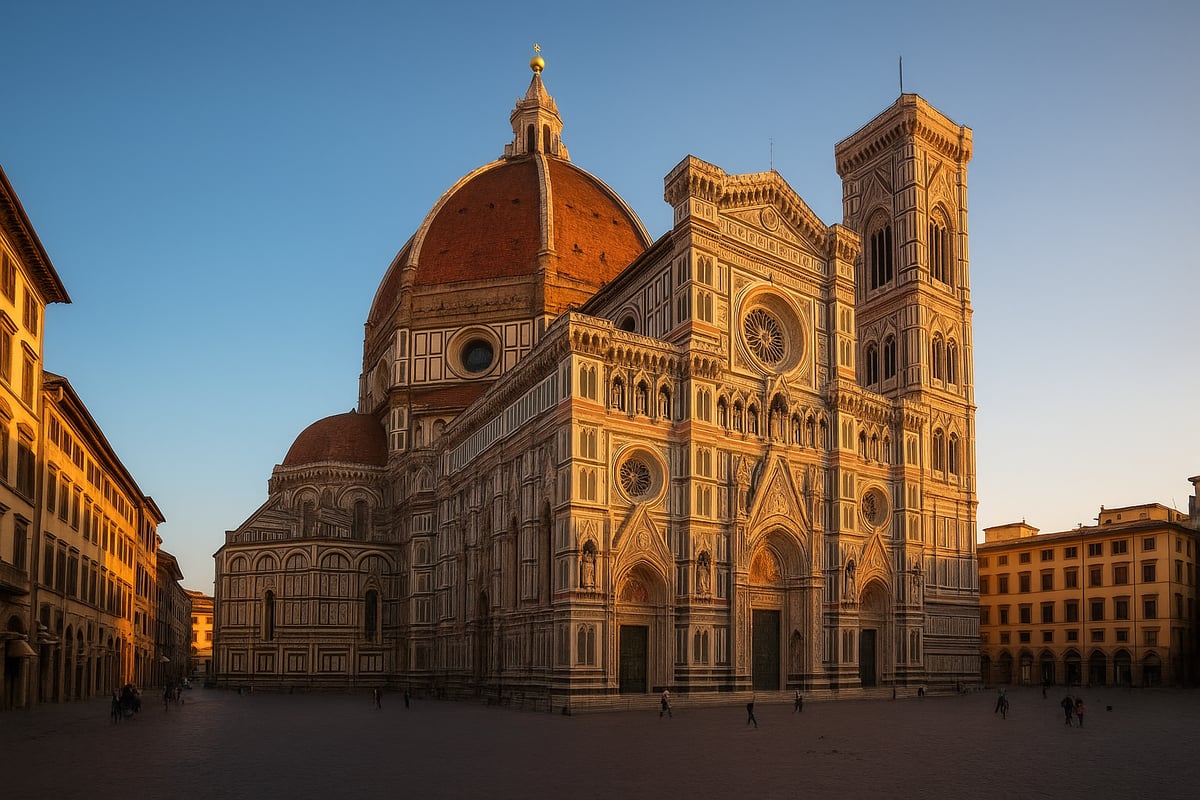
Rising at the very heart of piazza del duomo florence, the Cathedral of Santa Maria del Fiore stands as a testament to human ambition and devotion. Its silhouette has dominated Florence’s skyline for centuries, drawing visitors from around the world to marvel at both its spiritual and architectural significance. The cathedral’s story is inseparable from the evolution of piazza del duomo florence, shaping and reflecting the city’s identity.
Architectural Grandeur and Historical Milestones
The origins of the cathedral trace back to 1296, when Arnolfo di Cambio envisioned a structure worthy of Florence’s rising prominence. Built on the ancient site of Santa Reparata, the cathedral embodies the Italian Gothic style, characterized by soaring vaults and a striking polychrome marble façade. This façade, completed in the 19th century, seamlessly blends white, green, and pink marble, creating a visual anchor within piazza del duomo florence.
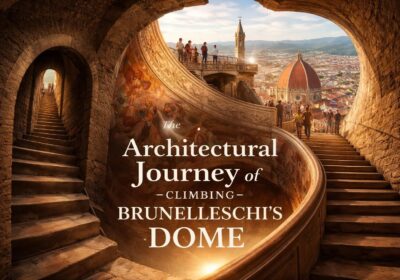
Inside, visitors are greeted by masterpieces such as the frescoes of Paolo Uccello and Andrea del Castagno, Renaissance stained glass windows, and the monumental clock by Paolo Uccello. The cathedral’s crowning achievement is Filippo Brunelleschi’s dome, completed in 1436. As the largest masonry dome ever constructed, its double-shell design was revolutionary and remains a symbol of engineering prowess. The dome not only dominates piazza del duomo florence but also offers breathtaking views after a rewarding climb.
Each year, over 1.5 million visitors explore the cathedral and its dome, drawn by the blend of history, art, and innovation. For those seeking deeper understanding, resources like Giotto’s Bell Tower and Cathedral insights provide detailed context on the cathedral’s construction and the artistry behind its most celebrated features.
Spiritual and Artistic Significance
Santa Maria del Fiore is more than an architectural marvel; it is the spiritual soul of piazza del duomo florence. Throughout history, the cathedral has hosted pivotal religious ceremonies, civic events, and moments of collective celebration. Its sacred space has witnessed coronations, papal visits, and countless processions that shaped the city’s cultural memory.
Art lovers find a treasure trove within its walls. The Last Judgement fresco, painted by Giorgio Vasari and Federico Zuccari, covers the dome’s interior with vibrant depictions of heaven and hell. Visitors are often captivated by the equestrian monuments and the historic clock, which still marks the canonical hours as in centuries past. The interplay of light through stained glass creates a kaleidoscope effect, illuminating the spiritual narrative embedded in every corner.
A highlight for many is the climb up 414 steps to the top of Brunelleschi’s dome. This ascent offers a unique perspective on both the cathedral’s construction and the cityscape of piazza del duomo florence. The panoramic views reward every effort, making the experience unforgettable for architecture enthusiasts and pilgrims alike.
Restoration and Preservation Efforts
Preserving the grandeur of the cathedral is an ongoing commitment, vital for the future of piazza del duomo florence. Conservation teams work year-round to maintain the marble façade, safeguard delicate frescoes, and restore centuries-old stained glass windows. Recent efforts have focused on cleaning and reinforcing the façade, ensuring that its details remain vivid for generations to come.
Technological advancements now aid preservation, from laser cleaning techniques to digital monitoring of structural health. Accessibility improvements have also been prioritized in anticipation of increased tourism in 2026. New visitor management strategies help protect the integrity of the cathedral while enhancing the experience for all who enter piazza del duomo florence’s most iconic monument.
These initiatives reflect Florence’s dedication to balancing heritage with modern needs. By continuously investing in restoration and visitor services, the city ensures that the Cathedral of Santa Maria del Fiore will inspire awe at the heart of piazza del duomo florence for centuries ahead.
The Baptistery of San Giovanni: Spiritual Origins and Artistic Splendor
Few monuments in the piazza del duomo florence evoke such awe as the Baptistery of San Giovanni. Standing at the heart of the square, this ancient structure is more than an architectural marvel—it is the spiritual wellspring from which Florence’s faith and identity have flowed for centuries.
Ancient Foundations and Architectural Features
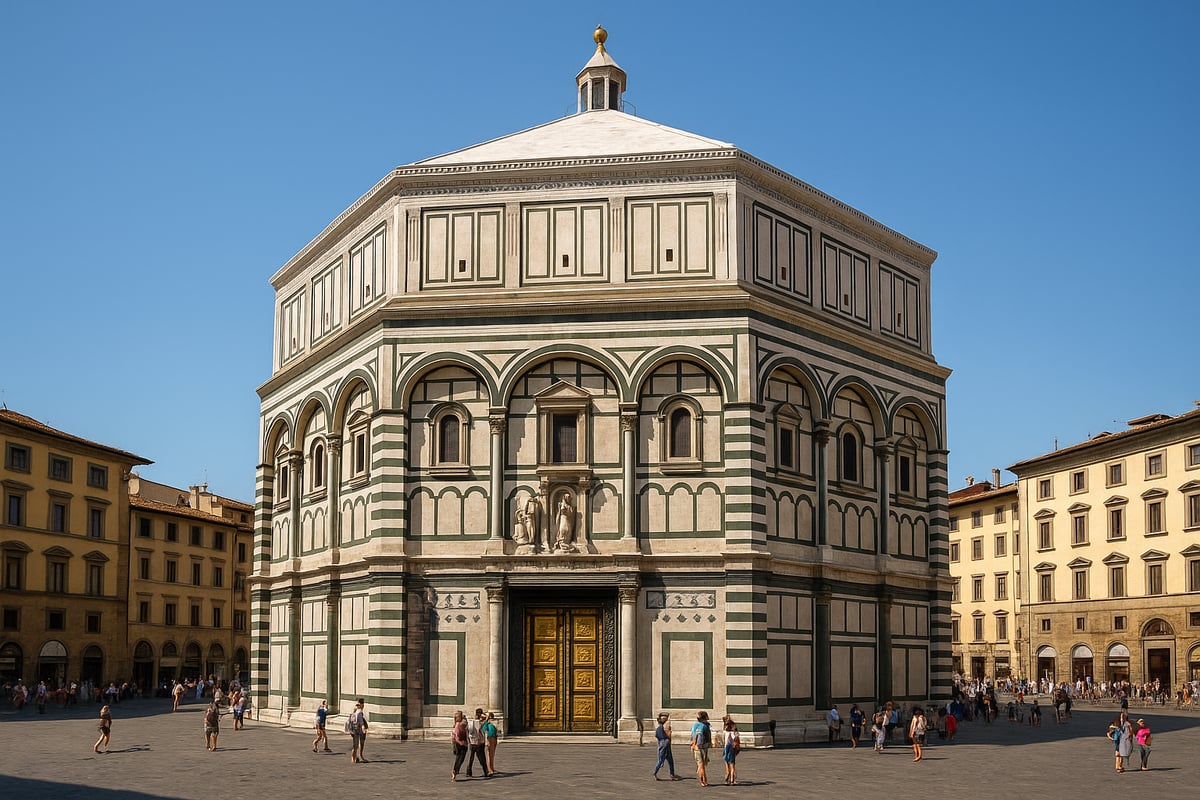
The origins of the Baptistery stretch deep into history, with foundations dating back to the 4th or 5th century. It is widely considered one of Florence’s oldest surviving buildings and a cornerstone of the piazza del duomo florence. Its unique octagonal plan represents regeneration and spiritual rebirth, echoing early Christian symbolism.
Constructed in the Romanesque style, the Baptistery’s exterior is clad in alternating panels of white and green marble from Prato. This striking pattern sets it apart within the piazza del duomo florence and creates a harmonious dialogue with the neighboring cathedral. The Baptistery long served as the city’s primary site for baptisms, including the legendary poet Dante Alighieri, forging a direct link between Florence’s literary and spiritual heritage.
Visitors are often struck by the building's symmetry and grandeur. The structure’s simple yet elegant lines, combined with its historic function, make it a must-see for anyone exploring the piazza del duomo florence.
The Bronze Doors: Gates of Paradise
No visit to the piazza del duomo florence is complete without marveling at the Baptistery’s bronze doors, renowned throughout the world. The most famous, Lorenzo Ghiberti’s East Doors, took 27 years to complete and were so beautiful that Michelangelo dubbed them the “Gates of Paradise.”
These monumental doors depict intricate biblical scenes in high relief, each panel telling a story from the Old Testament. The originals, now housed in the Opera del Duomo Museum for preservation, are replaced by faithful replicas on the Baptistery itself. Alongside the East Doors, Ghiberti’s North Doors and Andrea Pisano’s South Doors add to the artistic richness, illustrating episodes from the life of Christ and John the Baptist.
To learn more about why the Baptistery is considered one of the city’s essential sites, see this Top 10 Florence attractions guide, which highlights its enduring appeal within the piazza del duomo florence.
Mosaic Ceiling and Interior Highlights
Step inside the Baptistery and you are greeted by a breathtaking mosaic ceiling, crafted by Venetian artisans between 1225 and 1330. This dazzling spectacle covers the entire dome, immersing visitors in a golden panorama that radiates light and color throughout the interior of the piazza del duomo florence’s iconic monument.
The mosaics depict scenes from Genesis, the Last Judgement, and the life of John the Baptist, blending biblical narrative with local Florentine saints. Angels, patriarchs, and the dramatic figure of Christ in Majesty dominate the composition, guiding the viewer’s gaze upward. The Baptistery’s marble floor, adorned with geometric mosaics, adds another layer of artistry to this sacred space.
For many, the golden ceiling is the highlight of their journey through the piazza del duomo florence, offering a glimpse into the city’s spiritual and artistic soul.
Giotto’s Campanile: The Bell Tower of Artistic Innovation
Standing tall beside the cathedral, Giotto’s Campanile is an unmistakable landmark of the piazza del duomo florence. Its elegant profile and intricate details draw visitors from around the world, offering both a visual feast and a testament to centuries of artistic ambition.
Design and Construction
Commissioned in 1334, Giotto’s Campanile was envisioned as a symbol of Florence’s creative spirit. Giotto di Bondone, a master painter and architect, began the project with a design that celebrated both form and function. The tower’s construction continued after Giotto’s passing, with Andrea Pisano and Francesco Talenti completing it in 1359.
Rising to 84 meters, the campanile features geometric patterns in white, red, and green marble. Its harmonious proportions reflect the balance seen throughout the piazza del duomo florence. The structure’s blend of Gothic and Florentine Romanesque elements creates a distinctive silhouette, making it an architectural marvel in the heart of the city.
Every detail, from the pointed arches to the slender vertical windows, was carefully planned. The campanile stands not just as a bell tower, but as a visual anchor for the entire piazza del duomo florence.
Sculptural Masterpieces and Decorative Program
Beyond its architecture, Giotto’s Campanile is adorned with sculptural masterpieces. The lower levels showcase a series of reliefs by Andrea Pisano, Donatello, and Luca Della Robbia. These artworks illustrate themes of human progress, biblical stories, and the city’s achievements.
The decorative program is complex, with hexagonal panels depicting scenes from Genesis, astronomy, and the liberal arts. Statues of prophets and patriarchs further enrich the narrative, blending spiritual and civic ideals. Many of the original sculptures have been moved to the Museo dell’Opera del Duomo for preservation, but their replicas continue to captivate visitors.
For those eager to learn more about the artistry behind these monuments, Stories behind Florence’s iconic buildings offers deeper insights into the piazza del duomo florence and its treasures.
Climbing the Tower: Experience and Views
A highlight of any visit to the piazza del duomo florence is climbing the 414 steps of Giotto’s Campanile. The ascent winds through narrow staircases, punctuated by windows that reveal glimpses of the city below. As you climb, the sounds of the bustling piazza fade, replaced by a sense of anticipation.
At the summit, visitors are rewarded with panoramic views of Florence and the iconic dome of Santa Maria del Fiore. The vantage point is ideal for photography, offering a unique perspective on the city’s rooftops and distant hills.
The climb is a popular experience for architecture and photography enthusiasts alike. For many, reaching the top of Giotto’s Campanile becomes an unforgettable memory within the storied piazza del duomo florence.
Museo dell’Opera del Duomo: Florence’s Renaissance Treasury
Nestled behind the cathedral, the Museo dell’Opera del Duomo is the essential treasury of piazza del duomo florence. This renowned museum houses the original masterpieces created for the square’s monuments, offering visitors a unique journey through centuries of artistic achievement. As the guardian of Florence’s most precious sculptures and relics, the museum stands as a testament to the city’s enduring creative spirit.
Origins and Purpose
The Museo dell’Opera del Duomo was founded in 1891 to safeguard and display the original artworks from piazza del duomo florence. Its mission was clear: to protect masterpieces that had adorned the cathedral, baptistery, and bell tower from weathering and time. The museum’s collection grew rapidly, encompassing sculptures, reliefs, and stained glass that once formed the artistic soul of the square.
Located just steps from the main piazza, the museum quickly became a cultural anchor for piazza del duomo florence. Its halls tell the story of the city’s devotion to faith and artistry, with each artifact playing a role in the square’s transformation across the centuries. Today, the museum is celebrated for preserving the legacy of Florence’s greatest artists and for offering insight into the evolution of this iconic urban space.
Must-See Masterpieces
A visit to the museum reveals the artistic heart of piazza del duomo florence. Here, visitors encounter world-famous treasures, each with a unique story:
- Ghiberti’s original Gates of Paradise: These gilded bronze doors, famed for their biblical reliefs, are displayed in all their restored glory.
- Donatello’s Penitent Mary Magdalene: A striking wooden sculpture that challenges Renaissance ideals and expresses deep emotion.
- Michelangelo’s unfinished Florentine Pietà: Created late in the artist’s life, this powerful marble group captures the pain and hope of human experience.
- Life-size recreation of Arnolfo di Cambio’s cathedral façade: This immersive display helps visitors visualize the medieval piazza del duomo florence.
Walking through these galleries, you gain a sense of the square’s immense artistic ambition and the extraordinary talents who shaped its identity.
Visitor Experience in 2026
In 2026, the Museo dell’Opera del Duomo will offer an even more engaging experience for visitors to piazza del duomo florence. Modernized galleries, improved lighting, and multilingual audio guides make the art accessible to all. Interactive exhibits, such as scale models of Brunelleschi’s dome and the artist’s death mask, allow deeper exploration for curious minds.
Accessibility is a priority, with ramps and elevators ensuring that everyone can enjoy the museum’s treasures. Visitor statistics show over 750,000 people experience the museum annually, reflecting its vital role in piazza del duomo florence’s cultural landscape. Looking ahead, the museum is set to grow even further with a major expansion planned to add 5,000 square meters of space. According to Expansion of Opera del Duomo Museum, this project will enhance the visitor journey and showcase even more masterpieces from the heart of Florence’s Renaissance.
Historic Palaces and Hidden Gems Surrounding the Square
The grandeur of piazza del duomo florence extends far beyond its celebrated monuments. Encircling the square, a tapestry of historic palaces and hidden corners reveals stories of power, charity, and artistry woven through the city's evolution.
Notable Buildings and Their Stories
Piazza del duomo florence is framed by a collection of remarkable palaces, each contributing to the square’s unique character. The Palazzo Guadagni Sacrati Strozzi, with its opulent Baroque interiors, serves as the seat of the Tuscan Provincial Council. The Palazzi dei Canonici, built in the 19th century, display statues honoring Arnolfo di Cambio and Brunelleschi, architects central to Florence’s legacy.
Nearby, the Palazzo della Misericordia houses the Venerable Arcicompagnia della Misericordia and its museum, reflecting centuries of charitable work. The Loggia del Bigallo, once an orphanage, now hosts the Museo del Bigallo, preserving the city’s philanthropic roots. The Archbishop’s residence, Palazzo Arcivescovile, was rebuilt after a 16th-century fire and remains a symbol of ecclesiastical authority. Palazzo Gondi, home to the Museo Torrini, celebrates Florence’s goldsmith tradition, while the understated Palazzo Naldini honors Donatello’s workshop.
For those planning to explore these treasures, the Piazza del Duomo visitor information page offers essential details on access and history.
Sasso di Dante: Literary Landmark
Among the square’s most intriguing features is the Sasso di Dante. According to tradition, this simple stone marks the spot where Dante Alighieri would sit and observe the construction of the cathedral. The presence of the Sasso di Dante connects piazza del duomo florence with the city’s literary heritage, inviting visitors to imagine the poet reflecting on the transformation unfolding before him.
Today, the stone is a favorite stop for literature lovers and those curious about Florence’s medieval past. Its enduring legend adds another layer to the square’s cultural significance.
Example: The maze of historic alleys and their transformation over centuries.
Winding through and around piazza del duomo florence, a network of narrow alleys hints at the city’s ancient roots. These lanes, once bustling with artisans and clergy, have evolved alongside the grand monuments. Over centuries, they witnessed the rise of Renaissance power, the reshaping of the urban landscape, and the daily rhythms of Florentine life.
Strolling these historic passages today reveals how piazza del duomo florence is not only a showcase for monumental architecture but also a living testament to the city’s layered history. Each alley and palace tells a story, rewarding those who pause to look beyond the obvious.
Planning Your Visit to Piazza del Duomo in 2026
Organizing your trip to piazza del duomo florence in 2026 involves more than just buying a ticket. A thoughtful plan ensures you experience the square's treasures comfortably and efficiently, especially as new rules and visitor trends shape the experience. Here’s how to make the most of your visit while respecting this world-renowned heritage site.
Entry, Tickets, and Visitor Information
The piazza del duomo florence is busiest in spring and summer. Most monuments open from early morning until late afternoon, but times can vary, especially during festivals. Advance booking is highly recommended, with options for single entries or combined passes covering the Cathedral, Dome, Baptistery, and Bell Tower. Starting in March 2025, new rules for Duomo access in 2025 require named tickets and ID checks, so ensure your booking matches your identification. Visitor numbers peak in July and August, while November and February offer quieter experiences.
Accessibility and Practical Tips
Piazza del duomo florence has seen significant upgrades to ease access for all. Ramps, lifts, and designated paths support visitors with mobility needs. Large bags and luggage are not permitted inside the monuments, and a modest dress code is enforced—shoulders and knees must be covered. Security checks are routine, and facilities such as restrooms and cloakrooms are located near the main entrances. For a smoother experience, arrive early or late in the day to avoid the busiest crowds.
Events and Seasonal Highlights
The calendar at piazza del duomo florence is filled with vibrant events. The famous Scoppio del Carro, held each Easter, draws both locals and travelers for its dramatic fireworks and centuries-old tradition. Throughout 2026, expect special exhibitions, concerts, and religious festivals that transform the square into a stage for Florence’s living culture. Check the official event schedule ahead of time to align your visit with these unique moments.
Nearby Attractions and Experiences
Surrounding the piazza del duomo florence are some of Florence’s most esteemed sites. Within minutes, you can reach the Uffizi Gallery, Accademia Gallery, Palazzo Vecchio, and Gucci Garden. Guided tours, self-guided walks, and audio guides are widely available, allowing you to deepen your understanding of each monument’s history. Consider enhancing your visit with a Duomo Cathedral audio guide, which brings the art and architecture to life as you explore.
Sustainable Tourism and Preservation
Sustaining the beauty of piazza del duomo florence is a shared responsibility. The city and UNESCO work together to balance tourism with preservation, introducing caps on daily visitors and encouraging sustainable practices. Support local businesses, respect quiet zones, and follow all posted guidelines to help protect this historic site. By traveling mindfully, you contribute to the future of Florence’s most iconic square for generations to come.
Expert-Led Tours and Skip-the-Line Experiences in Florence
Visiting piazza del duomo florence in 2026 means joining countless travelers drawn to its artistic and historical wonders. With such high demand, long lines at the cathedral, Baptistery, and museums are common, especially during peak seasons.
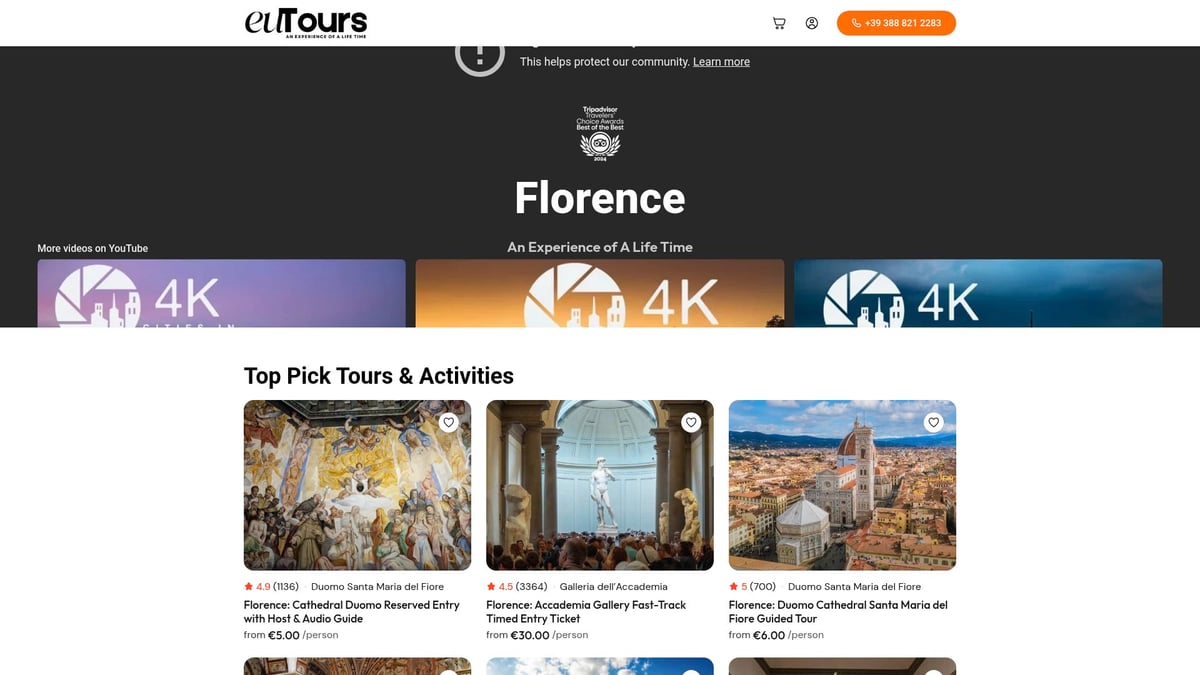
To make the most of your time, expert-led tours and skip-the-line tickets offer a smart solution. EU Tours, a Florence-based specialist, provides a range of curated experiences designed to help visitors explore piazza del duomo florence with ease and depth. Their offerings include reserved entry tickets, private and themed tours, and multilingual audio guides for key sites.
For those seeking an independent yet immersive visit, an audio guide for the Duomo Cathedral is available, allowing you to discover the stories and artistry at your own pace. Guided tours, led by local experts, ensure you uncover hidden details and appreciate the context behind every masterpiece.
Online booking is straightforward, and tours are highly rated for their quality and flexibility. To secure your preferred time and skip the crowds, booking in advance for 2026 is strongly advised.
Whether you choose a personalized tour or a self-guided audio experience, expert guidance will enrich your journey through Florence's iconic square.
As you plan your journey to Florence’s Piazza del Duomo in 2026, imagine immersing yourself in centuries of history, art, and architectural brilliance—all with the guidance of local experts who bring every story to life. Exploring these treasures is even more rewarding when you can skip the lines and focus on what truly matters—connecting with Florence’s remarkable heritage. If you want to make the most of your visit and enjoy seamless access to the city’s most iconic sites, I recommend securing your spot in advance. Don’t miss the opportunity to experience it all—Book Now.
Article written using RankPill.