
Santa Maria Duomo: Florence Cathedral Visitor Guide 2026
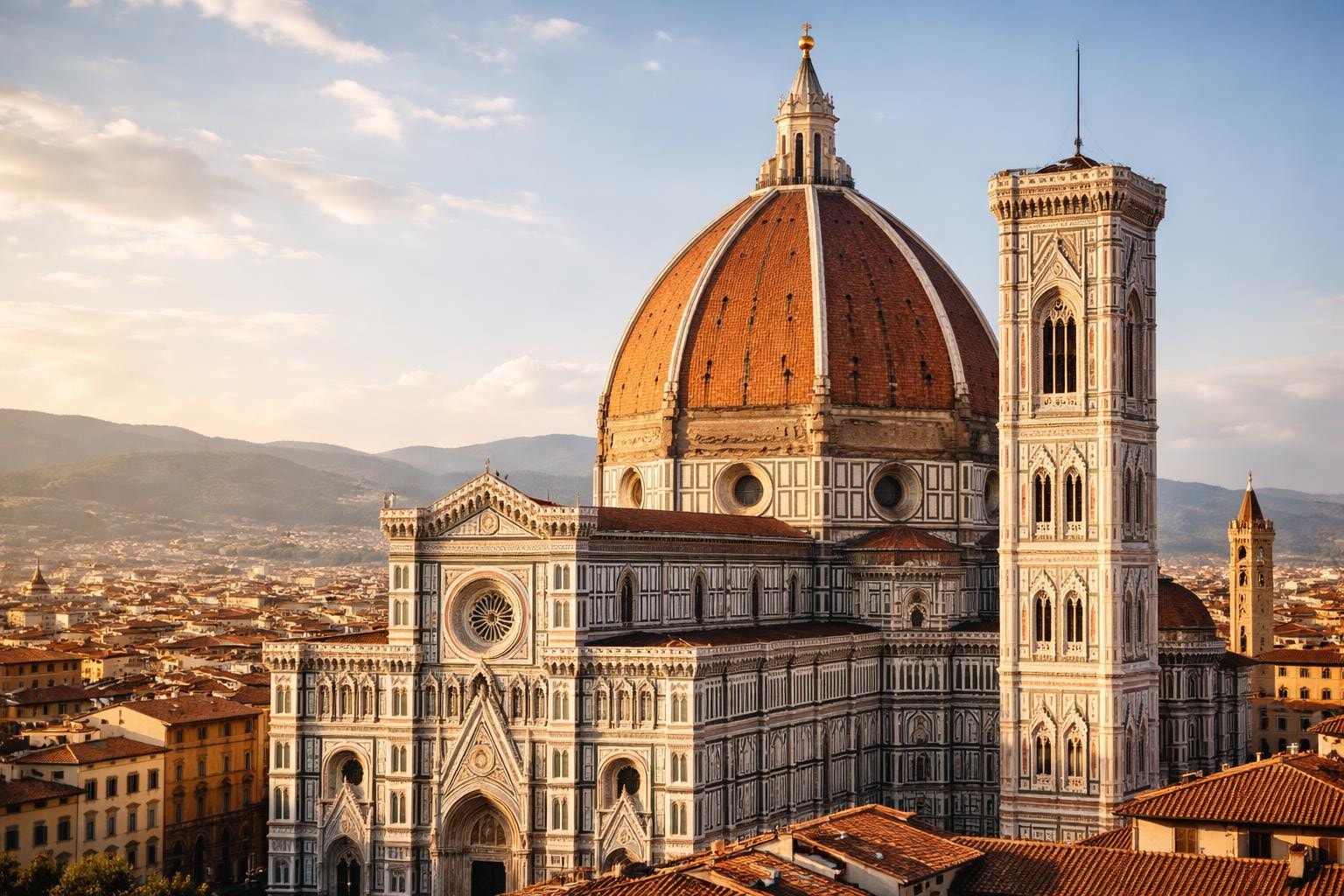
The santa maria duomo stands as Florence's most recognizable landmark and one of Italy's greatest architectural achievements. Officially known as the Cathedral of Santa Maria del Fiore, this magnificent structure dominates the city's skyline with Brunelleschi's revolutionary dome, creating an unforgettable silhouette that has defined Florence for nearly six centuries. Whether you're planning your first visit or returning to explore deeper layers of Renaissance history, understanding the cathedral's significance, architectural innovations, and practical visiting information will enhance your experience at this extraordinary monument.
Architectural Masterpiece of the Renaissance
The santa maria duomo represents a monumental collaboration spanning multiple generations of architects, artists, and craftsmen. Construction began in 1296 under the direction of Arnolfo di Cambio, who designed the Gothic foundation and nave that would serve as the cathedral's base structure. The project's ambitious scale reflected Florence's growing wealth and political power during the late medieval period.
The Revolutionary Dome
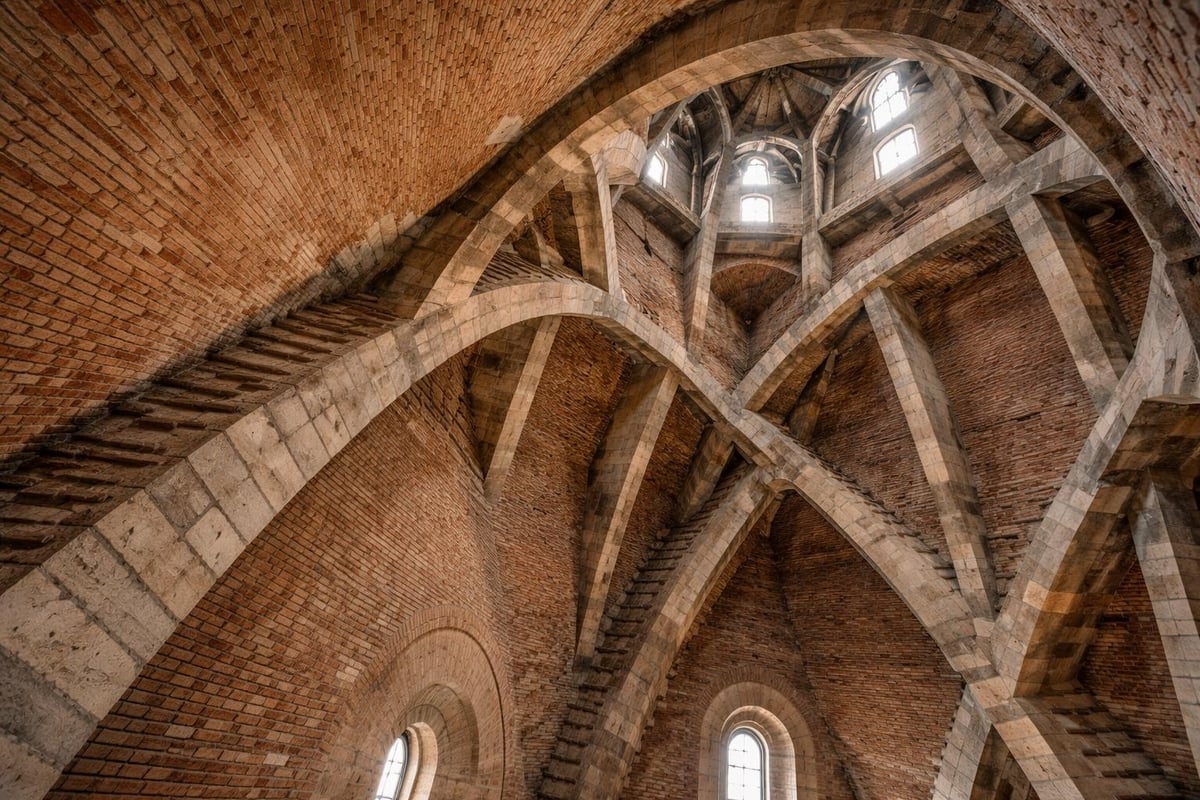
Filippo Brunelleschi's dome remains the defining feature of the santa maria duomo and stands as one of history's greatest engineering accomplishments. Completed in 1436, the dome solved an architectural challenge that had puzzled builders for decades: how to span the massive octagonal opening without traditional wooden scaffolding.
Brunelleschi's innovative techniques included:
- A double-shell construction that reduced weight while maintaining structural integrity
- A herringbone brick pattern that allowed the dome to support itself during construction
- Hidden ribs and chains embedded within the masonry to distribute stress
- A revolutionary building process that eliminated the need for expensive temporary supports
The dome measures 143 feet in diameter and rises 375 feet from ground level, dominating Florence's historic center. This Britannica article provides a comprehensive overview of the Florence Cathedral’s history, architecture, and significance, detailing its construction phases and artistic features. Recent discoveries continue to shed light on Brunelleschi's genius, with a terracotta bust identified in 2025 offering new insights into the architect's legacy.
The Cathedral Complex Experience
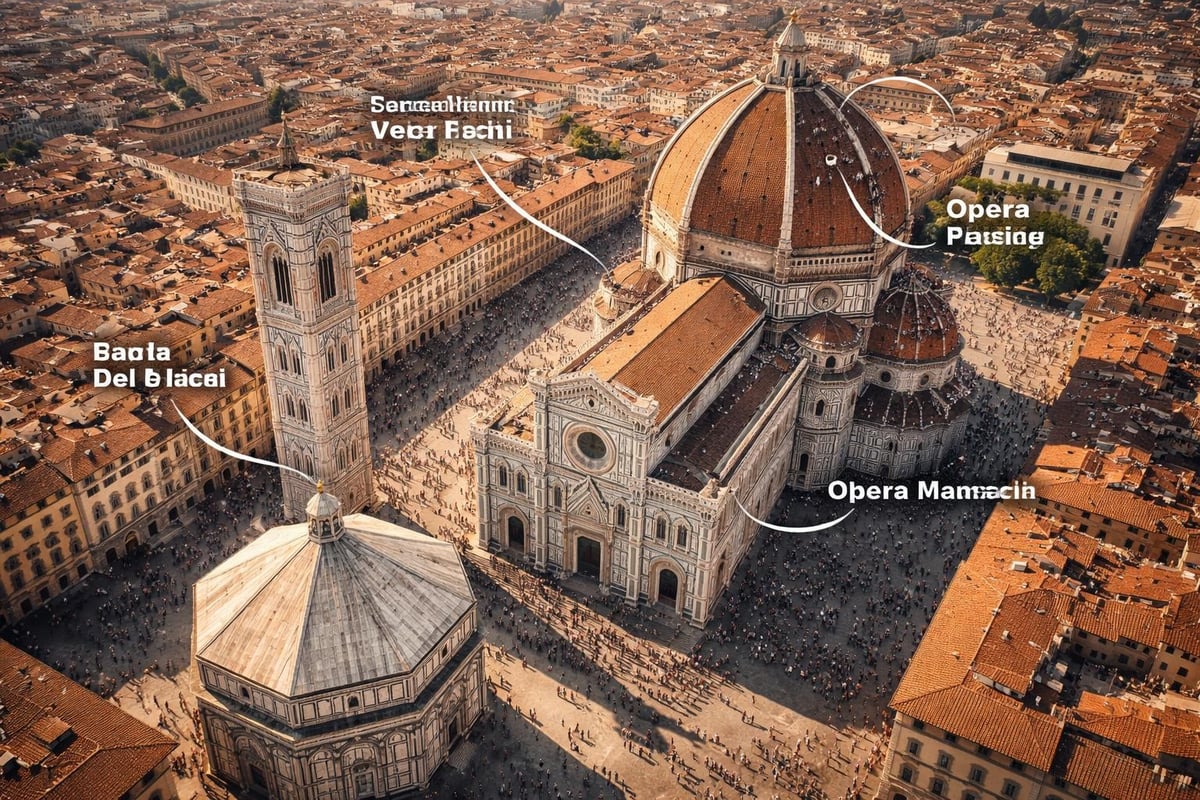
Visiting the santa maria duomo involves more than simply entering the cathedral itself. The entire complex includes multiple monuments, each offering unique perspectives on Florence's artistic and religious heritage.
Cathedral Monuments Overview
| Monument | Height/Features | Approximate Climb Duration | Key Highlights |
|---|---|---|---|
| Cathedral Nave | Ground level | No climb required | Marble floors, stained glass, frescoes |
| Brunelleschi's Dome | 463 steps | 45-60 minutes | Panoramic city views, dome interior |
| Giotto's Bell Tower | 414 steps | 30-45 minutes | Gothic architecture, close-up facade details |
| Baptistery | Ground level | No climb required | Bronze doors, mosaic ceiling |
| Crypt & Museum | Underground/indoor | 15-30 minutes | Archaeological remains, original artworks |
The cathedral's interior features the stunning Last Judgment fresco by Vasari and Zuccari, which covers the dome's interior with vivid scenes of heaven and hell. This massive artistic undertaking, completed between 1572 and 1579, required extensive restoration work in the 1990s to preserve its vibrant colors and intricate details.
Planning Your Visit
The santa maria duomo operates on a timed-entry system that requires advance reservations for dome and bell tower climbs. Walk-up access is extremely limited, especially during peak tourism months from April through October. Understanding the ticketing structure and planning ahead ensures you won't waste valuable vacation time standing in long queues.
Essential planning considerations:
- Reserve tickets 2-4 weeks in advance during high season
- Allow 2-3 hours for a comprehensive cathedral complex visit
- Schedule dome climbs for early morning or late afternoon to avoid midday heat
- Wear comfortable shoes with good traction for climbing narrow staircases
- Dress modestly with covered shoulders and knees for cathedral entry
Navigating the Visitor Experience
Successfully experiencing the santa maria duomo requires strategic planning, particularly for first-time visitors to Florence. The cathedral's popularity means crowds are inevitable, but smart scheduling and ticket choices can dramatically improve your experience.
Skip-the-Line Access Benefits
Standard admission queues at the santa maria duomo can extend to 60-90 minutes during peak periods, consuming precious travel time. Priority access tickets and guided tours eliminate this frustration by providing dedicated entry times and reserved climbing slots.
- Book timed-entry tickets that guarantee your climbing slot without general admission waits
- Choose early morning time slots (8:00-9:30 AM) when crowds are lightest and lighting is optimal for photography
- Consider guided tour options that provide historical context while bypassing standard queues
- Download audio guide content before arriving to enhance self-guided exploration
- Review dress code requirements to avoid entry denial for inappropriate attire
The dome climb presents physical challenges that visitors should consider carefully. The 463-step ascent includes narrow passages, steep inclines, and sections where you'll walk between the dome's inner and outer shells. Claustrophobic individuals may find certain segments uncomfortable, and there's no option to turn back once you've started climbing.
Audio Guide Enhancements
Modern visitors benefit from multilingual audio guides that bring the santa maria duomo's history to life through detailed narratives and expert commentary. These digital companions provide flexibility to explore at your own pace while gaining insights that might otherwise require expensive private tours.
Audio guide advantages include:
- Self-paced exploration without group schedule constraints
- Detailed explanations of architectural features and artistic elements
- Historical context about the Medici family's patronage and Florence's political history
- Translations available in 8-12 languages for international visitors
- Ability to replay sections and spend extra time at personally interesting features
Artistic Treasures and Historical Significance
The santa maria duomo functions as both an active place of worship and a museum preserving centuries of artistic achievement. Beyond its architectural innovations, the cathedral houses remarkable works that span Florence's golden age of creativity.
Notable Artistic Features
The cathedral's facade, completed in the 19th century, features intricate geometric patterns in white, green, and pink marble from quarries throughout Tuscany. This polychrome decoration reflects the Gothic Revival movement's interpretation of medieval aesthetics, though it differs significantly from the original 14th-century design.
Inside the cathedral, visitors encounter:
- Stained glass windows designed by Lorenzo Ghiberti and Donatello, filtering colored light across the nave
- 24-hour clock painted by Paolo Uccello, running counterclockwise in medieval fashion
- Equestrian frescoes honoring military leaders John Hawkwood and Niccolò da Tolentino
- Marble floor inlays creating geometric patterns that guide visitors through the sacred space
- The Last Judgment fresco covering 3,600 square meters of dome interior
The Baptistery's Bronze Doors
Adjacent to the santa maria duomo stands the Baptistery of San Giovanni, home to three sets of monumental bronze doors that revolutionized relief sculpture. Lorenzo Ghiberti's "Gates of Paradise" on the eastern entrance depict Old Testament scenes with unprecedented perspective and naturalism, earning Michelangelo's famous praise.
| Door Set | Artist | Date | Theme |
|---|---|---|---|
| South Doors | Andrea Pisano | 1330 | Life of John the Baptist |
| North Doors | Lorenzo Ghiberti | 1424 | New Testament scenes |
| East Doors | Lorenzo Ghiberti | 1452 | Old Testament narratives |
Maximizing Your Cathedral Visit
Experienced travelers know that successful sightseeing requires more than simply showing up at famous landmarks. The santa maria duomo demands thoughtful preparation to fully appreciate its scale, artistry, and historical importance.
Seasonal Considerations for 2026
Florence's climate varies significantly throughout the year, affecting both comfort levels during dome climbs and crowd density at popular monuments. Summer months bring intense heat that makes the unventilated stairways particularly challenging, while winter offers cooler temperatures but shorter daylight hours for optimal photography.
Seasonal visiting patterns:
- Spring (March-May): Moderate temperatures, increasing crowds, ideal lighting conditions
- Summer (June-August): Peak tourism, long daylight hours, intense heat during climbs
- Fall (September-November): Pleasant weather, manageable crowds after September, golden hour lighting
- Winter (December-February): Fewest visitors, shorter hours, occasional rain but dramatic skies
Combining Cathedral Experiences
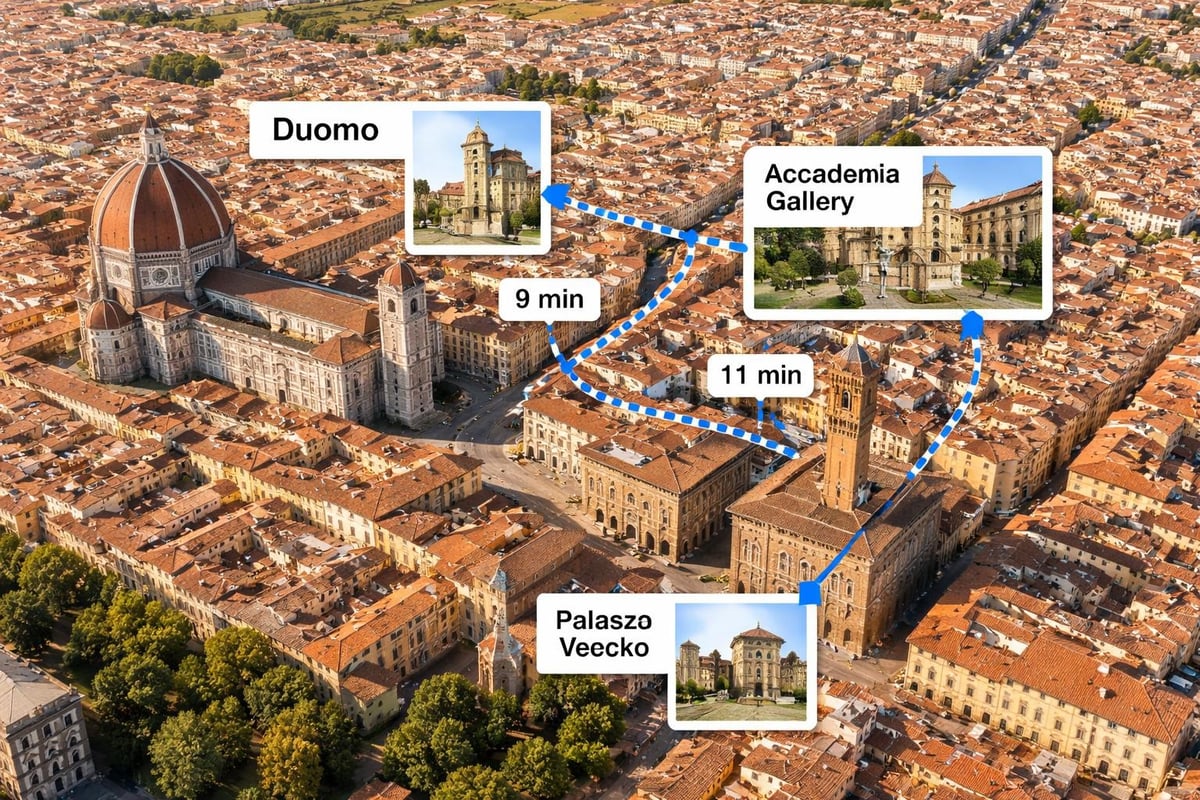
The santa maria duomo sits at the heart of Florence's historic center, surrounded by world-class museums and landmarks within easy walking distance. Strategic itinerary planning allows you to experience multiple Renaissance masterpieces efficiently while managing energy levels and avoiding backtracking.
Visitors interested in comprehensive experiences often pair their cathedral visit with the Accademia Gallery, home to Michelangelo's David, or Palazzo Vecchio, where Medici family history comes alive through opulent chambers and hidden passageways. EU Tours offers curated combinations that provide skip-the-line access to multiple monuments with coordinated timing that maximizes sightseeing efficiency.
Behind the Scenes: Restoration and Preservation
The santa maria duomo requires constant maintenance and periodic restoration to preserve its artistic treasures and structural integrity for future generations. Recent decades have seen major conservation projects addressing centuries of accumulated dirt, pollution damage, and natural deterioration.
Ongoing Conservation Efforts
Cathedral authorities employ specialized conservators who use cutting-edge technology to monitor structural stability and environmental conditions affecting the artworks. Laser cleaning techniques remove surface grime from marble facades without damaging underlying stone, while climate control systems protect delicate frescoes from humidity fluctuations.
The dome's interior frescoes underwent comprehensive restoration between 1978 and 1994, revealing vibrant colors that had been obscured by centuries of candle smoke and environmental pollution. Conservation teams documented every square inch photographically, creating detailed records that guide future maintenance work.
Modern preservation techniques include:
- Non-invasive laser scanning to create precise 3D structural models
- Environmental monitoring systems tracking temperature, humidity, and pollution levels
- Specialized cleaning methods tailored to different marble types and surface conditions
- Preventive maintenance schedules based on predictive algorithms
- Public education programs promoting responsible visitor behavior
Practical Information for 2026 Visitors
Understanding current policies, hours, and accessibility options ensures your santa maria duomo visit proceeds smoothly without unexpected complications or disappointments.
Access and Mobility Considerations
The cathedral nave is wheelchair accessible through side entrances, but the dome and bell tower climbs are not suitable for visitors with mobility limitations. No elevators service these monuments, and the narrow medieval staircases cannot accommodate wheelchairs or walkers.
Families with young children should carefully consider whether dome climbing is appropriate, as there are no rest areas once you begin the ascent, and carrying small children creates safety concerns on steep sections. The cathedral recommends children be at least 6-7 years old and comfortable with heights and enclosed spaces.
Photography Guidelines
Photography is permitted inside the santa maria duomo for personal use, but flash photography and tripods are prohibited to prevent disruption to other visitors and potential damage to light-sensitive artworks. The dome climb offers spectacular photography opportunities, particularly from the external gallery circling the lantern.
Photography tips for optimal results:
- Use wide-angle lenses to capture architectural scale in confined spaces
- Arrive during golden hour (first or last hour of sunlight) for exterior shots
- Bring lens cleaning cloths as climbing generates dust
- Set high ISO to compensate for low interior light without flash
- Respect posted restrictions near particularly sensitive artworks
Cultural Context and Florence's Identity
The santa maria duomo transcends its function as a religious building to serve as Florence's primary symbol and a tangible connection to the city's extraordinary Renaissance heritage. Understanding this broader cultural significance enriches any visit beyond simple sightseeing.
The Medici Legacy
Florence's most powerful family, the Medici, played a crucial role in the cathedral's completion and decoration, though their patronage was sometimes motivated by political calculation as much as religious devotion. The family's support of Brunelleschi's dome project demonstrated their commitment to civic pride and artistic innovation.
The cathedral witnessed numerous historic events that shaped Florence's destiny:
- Pazzi Conspiracy assassination attempt during Easter Mass (1478)
- Savonarola's fiery sermons denouncing worldly corruption (1490s)
- Coronation ceremonies for Florentine leaders and visiting dignitaries
- Public ceremonies marking major civic and religious celebrations
- Modern papal visits acknowledging the cathedral's continuing importance
Contemporary Religious Life
Despite its status as a major tourist attraction, the santa maria duomo remains an active Catholic cathedral serving Florence's religious community. Daily masses continue in designated areas, and visitors are expected to maintain respectful behavior appropriate for sacred spaces.
Understanding this dual function helps visitors appreciate the balance cathedral authorities must strike between welcoming millions of annual tourists and preserving the building's spiritual purpose for local worshippers. Certain areas may be temporarily closed during religious ceremonies, and visitor access is sometimes restricted during major Catholic holy days.
Enhancing Your Cathedral Understanding
Preparation before visiting the santa maria duomo dramatically improves your appreciation of its architectural innovations, artistic treasures, and historical significance. Even a modest investment in background research pays dividends when you encounter these masterpieces in person.
Educational Resources
Numerous books, documentaries, and online resources explore different aspects of the cathedral's history and artistry. Ross King's "Brunelleschi's Dome" provides an engaging narrative of the engineering challenges and political intrigue surrounding the dome's construction, while academic sources offer detailed architectural analysis.
Virtual tours and 360-degree photography available online allow you to preview the cathedral's layout and identify specific features you want to prioritize during your visit. Many visitors find that familiarizing themselves with the floor plan and monument locations beforehand reduces on-site confusion and maximizes efficient use of limited visiting time.
Guided Tour Benefits
While self-guided exploration offers flexibility, expert-led tours provide context and insights that transform architectural features and artworks from beautiful objects into meaningful historical narratives. Knowledgeable guides explain symbolic meanings, point out easily-missed details, and answer questions that might not occur to independent visitors.
Professional guides often share lesser-known stories about the cathedral's construction, the personalities involved in its creation, and the ongoing preservation challenges faced by conservation teams. These human elements bring the santa maria duomo's centuries-long story to life in ways that static informational plaques cannot match.
The santa maria duomo stands as Florence's crown jewel, offering visitors an unparalleled encounter with Renaissance architecture, artistic genius, and centuries of Italian history. Whether you're drawn to Brunelleschi's engineering masterpiece, the cathedral's stunning artworks, or simply the breathtaking views from the dome's summit, this monument delivers unforgettable experiences that justify its status as one of Europe's most visited attractions. EU Tours specializes in skip-the-line access and expertly guided experiences at Florence's iconic landmarks, ensuring you maximize your time at the cathedral complex with reserved climbing slots, multilingual audio guides, or private expert-led tours that reveal the deeper stories behind this architectural triumph.